

Linear guideways—also known as linear motion guides or linear guide rails—are the backbone of modern industrial automation, CNC machinery, robotics, and semiconductor equipment. They ensure smooth, accurate, and stable motion for machines requiring precision positioning and heavy-load handling. In an era where efficiency and accuracy define competitiveness, understanding linear guideway systems is essential for engineers, technicians, and manufacturers alike.
This comprehensive article explores the construction, functionality, benefits, applications, and maintenance of linear guideways. It also offers insights into how to select the right guideway for your specific engineering needs.
Outline
| Section | Heading |
|---|---|
| Introduction | Understanding Linear Guideway Systems |
| Definition | What Is a Linear Guideway? |
| Structure | Components of a Linear Guideway |
| Working Principle | How a Linear Guideway Works |
| Materials | Common Materials Used in Linear Guideways |
| Motion Types | Linear vs. Rotational Motion Comparison |
| Types | Different Types of Linear Guideways |
| Design | Linear Ball Guideways vs. Roller Guideways |
| Technology | Advanced Design Features of Modern Guideways |
| Applications | Industrial Uses of Linear Guideways |
| CNC Machines | Role of Linear Guideways in CNC Machinery |
| Robotics | Linear Guideways in Robotic Automation |
| Semiconductor Industry | Importance in Precision Manufacturing |
| Automotive Sector | Enhancing Efficiency with Linear Guideways |
| Medical Devices | Linear Guideways in Healthcare Equipment |
| Installation | How to Properly Install a Linear Guideway |
| Lubrication | The Importance of Proper Lubrication |
| Maintenance | Maintenance Tips for Longevity |
| Common Issues | Troubleshooting Linear Guideway Problems |
| Load Ratings | How to Determine Load Capacity |
| Accuracy Classes | Understanding Precision Grades |
| Material Handling | Guideways in Transport and Conveyance Systems |
| Customization | Choosing the Right Linear Guideway for Applications |
| Advantages | Benefits of Using Linear Guideways |
| Future Trends | Smart Linear Guideway Systems in Industry 4.0 |
| FAQs | Frequently Asked Questions About Linear Guideways |
| Conclusion | Final Thoughts on Linear Guideway Technology |
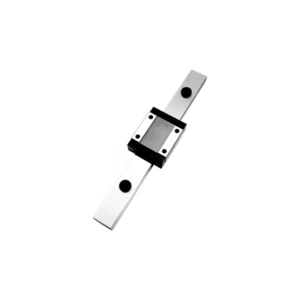
Understanding Linear Guideway Systems
Linear guideways are precision-engineered mechanical systems that facilitate controlled linear motion with minimal friction. They are the cornerstone of many modern machines requiring smooth, accurate, and repeatable movement.
Unlike conventional sliding systems, linear guideways utilize rolling elements—usually balls or rollers—between the guide rail and the block, drastically reducing friction while maintaining rigidity. This enables equipment to move heavy loads efficiently without sacrificing precision.
Linear guideways are fundamental in applications ranging from CNC machining centers, industrial robots, and medical scanners to semiconductor production lines, where both high speed and accuracy are non-negotiable.
What Is a Linear Guideway?
A linear guideway is a mechanical device designed to provide smooth, precise linear motion by guiding a moving component along a fixed path. Its primary function is to reduce friction and maintain alignment under load.
Linear guideways are typically composed of:
Guide rail: The stationary base, usually hardened steel.
Slider (block or carriage): The movable component that glides along the rail.
Rolling elements: Balls or cylindrical rollers between the rail and the block.
End caps and retainers: Components that guide and recycle the rolling elements.
This system allows for high precision, minimal deflection, and excellent load-bearing capacity, even in high-speed operations.
Components of a Linear Guideway
Each linear guideway system includes key elements designed for strength and accuracy:
Guide Rail:
Provides a hardened and ground surface for the block to travel along.Block or Carriage:
Houses the rolling elements and supports the applied load.Rolling Elements:
Small balls or rollers that circulate inside the block, reducing friction and ensuring smooth motion.End Seals and Scrapers:
Protect the internal rolling system from dust and debris.Lubrication System:
Ensures long service life by reducing wear on moving components.Retainers:
Prevent the rolling elements from falling out when the block is removed from the rail.
Together, these components create a highly efficient, durable, and precise motion system ideal for complex machinery.
How a Linear Guideway Works
Linear guideways operate on the rolling contact principle. As the block moves along the rail, the rolling elements inside circulate in a continuous loop, reducing friction between surfaces. This rolling motion minimizes wear, maintains consistent accuracy, and ensures smooth, low-resistance linear movement.
Compared with traditional sliding systems, linear guideways achieve:
Up to 50 times lower friction.
Significantly higher positioning accuracy.
Longer operational lifespan under identical load conditions.
Common Materials Used in Linear Guideways
The performance and longevity of a linear guideway heavily depend on the materials used in its construction:
Hardened alloy steel: Common for rails and blocks due to its strength and resistance to wear.
Stainless steel: Preferred in corrosive or cleanroom environments.
High-carbon steel: Offers excellent durability and stability under heavy loads.
Ceramic coatings: Sometimes used for increased corrosion resistance and reduced friction.
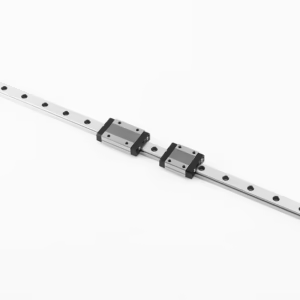
Types of Linear Guideways
Ball-Type Linear Guideways – Use steel balls as rolling elements; suitable for high-speed, light to medium load applications.
Roller-Type Linear Guideways – Use cylindrical rollers; ideal for heavy-duty operations requiring high rigidity.
Cross-Roller Guideways – Employ crossed roller arrangements for ultra-precise applications like optical alignment or semiconductor manufacturing.
Wide-Type Linear Guides – Offer enhanced moment load capacity for machines that experience lateral forces.
Applications of Linear Guideways
Linear guideways are indispensable across multiple industries due to their precision and durability:
CNC Machinery: Ensures cutting and milling precision with minimal vibration.
Robotics: Enables repeatable and accurate movements in automated systems.
Semiconductor Manufacturing: Provides ultra-smooth motion for delicate wafer handling.
Automotive Engineering: Used in precision assembly, welding, and testing stations.
Medical Equipment: Ensures reliable, accurate movements in imaging and diagnostic devices.
Packaging Industry: Facilitates fast, consistent motion for high-speed packaging lines.
Installation and Maintenance Tips
Installation
Mount rails on a rigid base to prevent deflection.
Ensure alignment accuracy using precision instruments.
Tighten bolts gradually to avoid rail distortion.
Maintenance
Lubricate regularly: Use compatible grease or oil to prevent wear.
Inspect seals: Replace worn seals to keep contaminants out.
Clean rails: Wipe off dust and debris periodically.
Check preload and alignment: Misalignment increases wear and decreases precision.
Proper care can extend the lifespan of a linear guideway by more than 50%.
Advantages of Linear Guideways
High precision and repeatability
Excellent rigidity under load
Low friction and smooth motion
Long service life and minimal maintenance
Compact structure suitable for automation systems
Reduced energy consumption due to low resistance
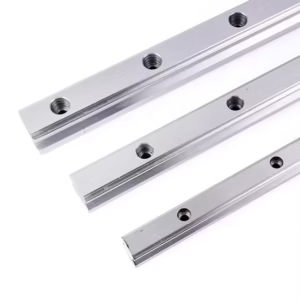
Future of Linear Guideways: Industry 4.0 Integration
Modern linear guideway technology is evolving rapidly. Manufacturers are now embedding smart sensors to monitor vibration, temperature, and lubrication levels in real time. These smart linear guideways enhance predictive maintenance, improve reliability, and reduce downtime.
In the era of Industry 4.0, intelligent motion systems are becoming standard in automated factories, bringing efficiency and accuracy to unprecedented levels.
Frequently Asked Questions
What is a linear guideway used for?
It provides precise linear motion for machinery such as CNCs, robots, and medical equipment.
What’s the difference between a linear guideway and a linear bearing?
A linear guideway supports heavy loads and provides rigidity, while linear bearings are better suited for lighter loads and simpler motion systems.
How long do linear guideways last?
With proper lubrication and maintenance, they can last tens of thousands of operational hours.
Can linear guideways handle heavy loads?
Yes. Roller-type guideways are designed to handle significant loads while maintaining high precision.
How do I choose the right linear guideway?
Consider load capacity, required precision, speed, and operating environment before selection.
Do linear guideways require lubrication?
Yes. Proper lubrication reduces friction, prevents corrosion, and extends service life.
Conclusion
A linear guideway is far more than a motion component—it’s a precision foundation that defines the accuracy, efficiency, and reliability of modern machinery. By combining low friction, high rigidity, and excellent durability, linear guideways are indispensable in industries ranging from robotics to aerospace.
Understanding their structure, function, and maintenance allows engineers to optimize equipment performance and longevity. As smart technologies continue to evolve, the next generation of linear guideways promises even greater intelligence, energy efficiency, and precision in automated systems.
Suggested Inbound Links:
Suggested Outbound Links: