

Outline
| Headings & Subheadings | LSI / Related Keywords |
|---|---|
| Introduction to Heavy Duty Linear Guide Rail | linear motion, industrial automation |
| What Is a Heavy Duty Linear Guide Rail | linear rail, bearing guide, motion system |
| Design and Structure of Heavy Duty Linear Guide Rail | carriage, rail, rollers |
| How Heavy Duty Linear Guide Rails Work | rolling motion, load distribution |
| Key Features and Specifications | rigidity, accuracy, performance |
| Types of Heavy Duty Linear Guide Rails | roller guides, wide rails, profile rails |
| Advantages of Heavy Duty Linear Guide Rail | strength, durability, precision |
| Heavy Duty Linear Guide Rail vs. Standard Linear Rail | comparison, load rating |
| Materials and Coatings | hardened steel, stainless steel, chrome plating |
| Applications in Heavy Machinery and Automation | CNC, robotics, gantry systems |
| Installation and Setup Tips | alignment, preload, torque control |
| Maintenance and Care | lubrication, inspection, cleaning |
| Common Problems and Their Solutions | vibration, noise, wear |
| Selecting the Right Heavy Duty Linear Guide Rail | load, size, speed, environment |
| Heavy Duty Linear Guide Rail in CNC Machines | rigidity, accuracy, speed |
| Future Innovations in Heavy Duty Linear Guide Rail | smart monitoring, self-lubrication |
| Top Manufacturers | YH Linear, THK, HIWIN, Bosch Rexroth |
| FAQs | lifespan, lubrication, operation |
| Conclusion | strength, reliability, innovation |
Introduction to Heavy Duty Linear Guide Rail
In modern industry, heavy duty linear guide rail systems serve as the backbone of high-load, high-precision machinery. From CNC machining centers to robotic gantries and automated production lines, these rails ensure precise, stable, and smooth linear motion — even under massive loads and continuous operation.
Unlike standard linear guides, heavy duty versions are built for toughness. They feature reinforced profiles, wider carriages, and optimized raceways to distribute stress evenly and maintain alignment under extreme conditions.
Manufacturers such as YH Linear, THK, and HIWIN have engineered these systems for industrial applications where performance and reliability define productivity.
What Is a Heavy Duty Linear Guide Rail
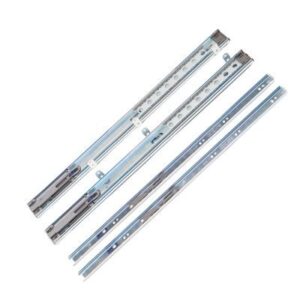
A heavy duty linear guide rail is a precision-engineered mechanical component designed to guide and support moving machine parts along a linear path while carrying substantial loads. It typically consists of a hardened steel rail and a bearing block (carriage) containing rollers or balls that circulate along internal raceways.
These rolling elements reduce friction while maintaining contact under pressure, allowing the system to move heavy loads smoothly and accurately.
Whether in large CNC milling machines or multi-axis robotic platforms, heavy duty guide rails are essential for ensuring stability and precision under dynamic forces.
Design and Structure of Heavy Duty Linear Guide Rail
The superior performance of heavy duty linear guide rails lies in their structural integrity. Key components include:
Guide Rail: Hardened and ground for straightness and rigidity.
Bearing Block / Carriage: Houses rolling elements for smooth motion.
Rolling Elements: Cylindrical rollers or balls designed for high load-bearing.
End Caps and Seals: Keep dirt, dust, and chips out of the motion path.
Lubrication System: Maintains consistent motion and reduces friction.
Their robust construction ensures consistent performance, even in demanding environments like machining centers, presses, and large-scale automation systems.
How Heavy Duty Linear Guide Rails Work
Heavy duty linear guide rails operate on the principle of rolling contact motion. As the carriage moves along the rail, rolling elements circulate within the raceways, significantly reducing friction compared to sliding surfaces.
Key operational characteristics include:
Uniform Load Distribution: Rollers or balls share load equally.
Smooth Linear Travel: Even under high pressure or vibration.
Minimal Friction Loss: Enables faster movement and higher precision.
Extended Lifespan: Reduced wear from contact surfaces.
By converting sliding friction into rolling motion, these rails achieve unparalleled smoothness and control, critical in precision machining.
Key Features and Specifications
Load Capacity: Supports extremely high static and dynamic loads.
Rigidity: Designed for heavy mechanical stress and bending resistance.
Precision: Offers micron-level accuracy in linear positioning.
Durability: Hardened components withstand years of industrial use.
Low Noise: Smooth rolling motion reduces operational sound.
Shock Absorption: Optimized contact geometry minimizes impact stress.
Corrosion Resistance: Available with protective coatings for harsh conditions.
These attributes make heavy duty linear guides ideal for continuous, high-load operations.
Types of Heavy Duty Linear Guide Rails
Roller Type Linear Guides: Use cylindrical rollers for maximum rigidity and load capacity.
Profiled Linear Rails: Feature rectangular cross-sections for precise alignment.
Wide Type Linear Guides: Increase stability in multi-directional loading.
Flanged Carriage Guides: Simplify installation and increase support surface.
Custom Heavy-Duty Rails: Designed for oversized machinery and gantries.
Choosing the right type ensures optimal performance based on the application’s weight, speed, and precision requirements.
Advantages of Heavy Duty Linear Guide Rail
Exceptional Load Handling: Can carry tons of static or dynamic force.
Long Service Life: Hardened raceways resist wear even in continuous operation.
Superior Precision: Maintains linear accuracy across heavy loads.
Reduced Friction: Improves energy efficiency and speed.
Shock Resistance: Handles impacts and vibration without deformation.
Low Maintenance: Requires minimal lubrication and care.
High Rigidity: Ensures stable machining and positioning accuracy.
These advantages make them indispensable for industries that demand both strength and accuracy.
Heavy Duty Linear Guide Rail vs. Standard Linear Rail
| Feature | Heavy Duty Linear Guide Rail | Standard Linear Rail |
|---|---|---|
| Load Capacity | Very High | Moderate |
| Rigidity | Exceptional | Medium |
| Precision | Micron-Level | High |
| Rolling Element | Rollers or Large Balls | Small Balls |
| Durability | Industrial Grade | Standard |
| Cost | Higher | Lower |
| Ideal Applications | CNC, Presses, Robotics | Light Automation |
In short, heavy duty linear guide rails outperform standard ones in every category related to performance and durability.
Materials and Coatings
Hardened Carbon Steel: Offers strength and wear resistance.
Stainless Steel: Prevents corrosion in damp or cleanroom settings.
Chrome Plating: Reduces friction and prevents rust.
Nickel or Black Oxide Coatings: Adds surface protection.
Ceramic Rollers: For low noise and extended lifespan.
These materials ensure consistent reliability even under challenging conditions.

Applications in Heavy Machinery and Automation
Heavy duty linear guide rails are vital in:
CNC Machining Centers: Maintain tool stability under cutting loads.
Robotic Gantries: Enable smooth multi-axis motion.
Press Machines: Support high-force stamping operations.
Injection Molding Machines: Ensure precise clamping movement.
Automated Storage Systems: Guide high-speed lifting platforms.
Packaging and Assembly Lines: Guarantee repeatable linear motion.
Their versatility and strength make them an essential part of every modern factory.
Installation and Setup Tips
Proper installation is critical for ensuring performance and durability:
Align rails with precision reference surfaces.
Tighten screws evenly and gradually to avoid warping.
Apply preload according to manufacturer specifications.
Use alignment jigs for parallelism.
Lubricate before first operation.
Accurate setup guarantees smooth, vibration-free operation and long-term precision.
Maintenance and Care
To ensure lasting performance:
Clean rails regularly using lint-free cloths.
Reapply grease or oil periodically.
Inspect roller and ball circuits for smooth movement.
Replace seals showing wear or cracks.
Check preload and alignment annually.
Proper maintenance can double the lifespan of a heavy duty linear guide rail system.
Common Problems and Their Solutions
| Problem | Possible Cause | Solution |
|---|---|---|
| Uneven Motion | Misalignment | Realign rails and reapply preload |
| Noise or Vibration | Dirt or poor lubrication | Clean and relubricate |
| Wear on Raceways | Overloading | Reassess load limits |
| Corrosion | Poor environmental protection | Apply anti-rust coating |
| Reduced Accuracy | Loose bolts | Tighten and recalibrate |
Preventive care ensures uninterrupted operation and cost efficiency.
Selecting the Right Heavy Duty Linear Guide Rail
| Criterion | Recommendation |
|---|---|
| Load Rating | Choose based on static and dynamic requirements |
| Speed | Verify maximum feed rate and acceleration |
| Environment | Use stainless steel in humid or corrosive settings |
| Maintenance Preference | Opt for self-lubricating systems |
| Precision Class | Match to your machine’s accuracy tolerance |
Choosing the right rail maximizes both precision and longevity.
Heavy Duty Linear Guide Rail in CNC Machines
In CNC machining, heavy duty linear guide rails are critical for maintaining precision under heavy spindle loads and rapid tool movement. Their rigidity minimizes vibration and tool deflection, resulting in superior surface finishes and dimensional accuracy.
High-end CNC machines rely on these rails for consistent accuracy, repeatability, and minimal downtime during demanding production cycles.
Future Innovations in Heavy Duty Linear Guide Rail
Integrated Smart Sensors: For real-time load and temperature monitoring.
Self-Lubricating Systems: Reduce downtime and manual servicing.
Lightweight Composite Materials: Improve energy efficiency.
Advanced Coatings: Enhance corrosion resistance and wear protection.
Predictive Maintenance via IoT: Helps identify issues before failure.
The future of heavy duty linear guide rail design lies in intelligent, efficient, and maintenance-free technology.
Top Manufacturers
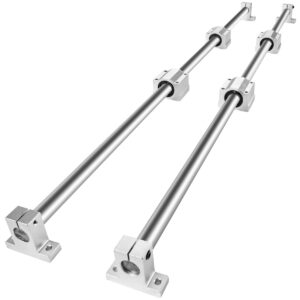
YH Linear: Specialists in industrial-grade heavy duty linear guide rails.
THK: Known for high-load linear motion components.
HIWIN: Offers precision roller and ball guide systems.
Bosch Rexroth: Supplies durable linear motion solutions for automation.
NSK Motion Systems: Renowned for engineering excellence and reliability.
Each of these brands represents cutting-edge innovation in linear motion technology.
FAQs
What is a heavy duty linear guide rail used for?
It’s used for precise linear motion in heavy machinery and automation equipment.
How much weight can a heavy duty linear guide rail handle?
Depending on design, it can support loads from hundreds of kilograms to several tons.
Do heavy duty linear guide rails need lubrication?
Yes. Regular lubrication ensures smooth performance and extends lifespan.
Can they be used in outdoor environments?
Yes, with stainless steel or corrosion-resistant coatings.
How long do heavy duty linear guide rails last?
With proper maintenance, they can last millions of cycles in industrial use.
Conclusion
The heavy duty linear guide rail is the unsung hero of industrial precision. Built for endurance and accuracy, it ensures that even the heaviest machines move with effortless precision.
For manufacturers seeking reliability and strength, YH Linear’s heavy duty linear guide rails deliver unmatched performance, making them the preferred choice in modern automation and CNC machinery.
In a world where precision meets power, heavy duty linear guide rails define the standard for mechanical excellence.