

Introduction
In modern machinery, achieving precise and smooth motion is critical for efficiency, accuracy, and longevity. One of the fundamental components enabling such motion is the guide bearing.
A guide bearing is a mechanical device designed to support and guide moving parts along a predetermined path, typically linear or rotational. Guide bearings are widely used in CNC machines, industrial robots, linear motion systems, packaging machines, heavy-duty machinery, and automated production lines.
This article provides a comprehensive overview of guide bearings, including their definition, structure, working principle, types, advantages, applications, selection criteria, and maintenance practices.
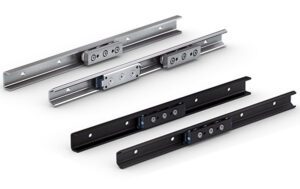
What Is a Guide Bearing?
A guide bearing is a mechanical component that provides controlled movement and support for moving parts. Its main purpose is to guide motion, reduce friction, and maintain alignment of machinery components.
Guide bearings can be used for linear motion, as in CNC machines and linear slides, or for rotational motion, as in motors and turbines. They are essential for applications that require precision, stability, and repeatability.
Key functions of guide bearings include:
Reducing friction between moving and stationary components.
Supporting radial, axial, or combined loads.
Maintaining accurate alignment during motion.
Enhancing efficiency, precision, and service life of machinery.
Structure of a Guide Bearing
A guide bearing system generally consists of the following components:
Bearing Housing or Block
The stationary part that holds and supports the bearing elements.
Provides rigidity and a secure mounting point for the guide bearing.
Rolling or Sliding Elements
Balls, rollers, or plain surfaces reduce friction between the moving part and the guide.
Facilitate smooth motion while supporting the load.
Guide Surface or Rail
A precision-machined path that ensures accurate motion.
Can be linear or curved, depending on the application.
Seals and Lubrication Channels
Protect the bearing from dust, debris, and contaminants.
Ensure proper lubrication to minimize wear and maintain smooth motion.
Some guide bearings also include end caps, wipers, or integrated sensors for advanced monitoring in high-precision applications.
Working Principle of Guide Bearings
The working principle of guide bearings depends on the type of motion:
Linear Guide Bearings
A carriage moves along a rail guided by rolling elements (balls or rollers).
Rolling elements convert sliding friction into low-friction rolling motion, allowing smooth and accurate linear movement.
Rotary Guide Bearings
The bearing supports a rotating shaft or component.
Rolling or sliding elements reduce friction and maintain alignment and stability during rotation.
In both cases, the guide bearing ensures that motion occurs along a predetermined path, maintaining accuracy, stability, and repeatability in mechanical systems.
Types of Guide Bearings
Guide bearings can be classified based on motion type, design, and application:
1. Linear Guide Bearings
Designed for linear motion along a rail or track.
Uses recirculating balls or rollers to reduce friction.
Common in CNC machines, 3D printers, automation systems, and robotic arms.
2. Roller Guide Bearings
Cylindrical rollers provide high load capacity and rigidity.
Ideal for heavy-duty machinery, presses, and industrial automation.
3. Ball-Type Guide Bearings
Recirculating ball bearings for low friction and high precision.
Suitable for CNC machining, precision robotics, and linear slides.
4. Plain or Sliding Guide Bearings
Uses a smooth sliding surface instead of rolling elements.
Simpler design, often used in low-speed, low-load applications.
5. Cam or Profiled Guide Bearings
Designed to guide motion along specific contours or curved paths.
Used in automated assembly lines, material handling, and specialized machinery.
6. Miniature or Compact Guide Bearings
Small size for compact machines, laboratory automation, and precision instruments.
Lightweight, easy to install, and suitable for tight-space applications.
Advantages of Guide Bearings
Guide bearings offer several significant benefits:
High Precision – Maintains accurate linear or rotational motion.
Low Friction – Rolling elements reduce wear and energy loss.
High Load Capacity – Supports heavy loads, including radial, axial, or moment forces.
Smooth Operation – Minimizes vibration and noise.
Durability – Resistant to wear, deformation, and fatigue.
Versatility – Suitable for CNC machines, industrial robots, linear slides, heavy machinery, and automated production.
Easy Maintenance – Pre-lubricated or self-lubricating designs simplify upkeep.
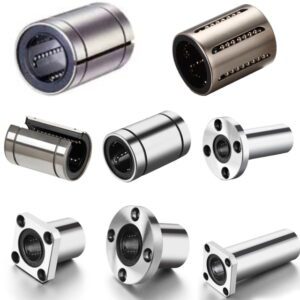
Applications of Guide Bearings
Guide bearings are essential in many industries requiring precise, low-friction motion:
CNC Machines – Linear slides and tool positioning.
3D Printers – Accurate movement of print heads and platforms.
Industrial Robots – Linear and rotary axes for pick-and-place operations.
Packaging Machinery – Smooth motion for filling, labeling, and assembly.
Heavy Machinery – Presses, milling machines, and presses requiring high rigidity.
Medical Equipment – Laboratory automation and diagnostic devices.
Automated Production Lines – Linear or curved motion guidance for assembly or material handling.
Energy Sector – Guide bearings for turbines, pumps, and rotating machinery.
Materials Used in Guide Bearings
Material selection is critical to performance, load capacity, and environmental resistance:
Hardened Steel
High strength and load-bearing capacity.
Ideal for heavy-duty linear and rotary guide bearings.
Stainless Steel
Corrosion-resistant, suitable for medical, food, and chemical applications.
Aluminum Alloy
Lightweight, corrosion-resistant, often used in robots, 3D printers, and compact machinery.
Composite or Coated Materials
Reduce friction and wear in specialized industrial environments.
How to Choose the Right Guide Bearing
Selecting the appropriate guide bearing involves evaluating several factors:
Type of Motion – Linear or rotational, depending on your machine’s requirement.
Load Capacity – Ensure the bearing can handle static, dynamic, and moment loads.
Precision Requirements – High-precision applications require tight tolerances.
Travel Distance or Stroke – Choose rails or paths that meet operational requirements.
Environmental Conditions – Use sealed or stainless-steel bearings for dust, moisture, or corrosive environments.
Speed and Acceleration – Ensure the bearing supports operational speed without vibration or backlash.
Maintenance – Self-lubricating or easy-to-lubricate bearings reduce downtime.
Installation and Maintenance Guidelines
Proper installation and maintenance are crucial for performance and longevity:
Alignment – Rail or guide surfaces must be flat and properly aligned.
Lubrication – Rolling or sliding elements require periodic lubrication.
Cleaning – Keep the guide bearing free from dust, debris, and contaminants.
Inspection – Regularly check for wear, looseness, or damage.
Replacement – Replace worn or damaged components promptly.
Following these steps ensures smooth motion, high precision, and extended service life.
Future Trends in Guide Bearings
Guide bearing technology is evolving rapidly:
Smart Guide Bearings – Sensors for load, temperature, and position monitoring.
Low-Friction Coatings – Advanced coatings reduce wear and improve efficiency.
Compact and Lightweight Designs – Aluminum and composite bearings reduce machine weight.
IoT Integration – Real-time monitoring for predictive maintenance in smart factories.
Hybrid Materials – Combining steel and aluminum for high-strength, lightweight solutions.
These trends are enhancing precision, durability, and automation efficiency in modern machinery.

Frequently Asked Questions (FAQs)
1. What is a guide bearing?
A guide bearing is a mechanical component that supports and guides motion along a linear or rotational path while reducing friction and maintaining alignment.
2. What types of guide bearings are there?
Guide bearings include linear bearings, roller bearings, ball-type bearings, plain bearings, cam/profiled bearings, and miniature bearings.
3. Where are guide bearings used?
Applications include CNC machines, 3D printers, industrial robots, packaging machinery, medical equipment, and heavy machinery.
4. Can guide bearings support heavy loads?
Yes, particularly roller and profile-type guide bearings, which are designed for high radial, axial, and moment loads.
5. Do guide bearings require maintenance?
Yes. Proper lubrication, cleaning, and inspection are essential for long-term performance.
6. What materials are guide bearings made from?
Hardened steel, stainless steel, aluminum alloys, and composite materials are commonly used, depending on load, precision, and environmental requirements.
Conclusion
A guide bearing is a critical component in modern machinery, enabling smooth, precise, and controlled motion.
By reducing friction, supporting loads, and maintaining alignment, guide bearings improve efficiency, precision, and durability in industries such as CNC machining, robotics, automation, medical equipment, packaging, and heavy machinery.
Proper selection, installation, and maintenance are key to achieving optimal performance and long service life. With ongoing innovations in materials and smart technology, guide bearings will continue to play a vital role in precision engineering and industrial automation.