

In modern machinery and automation, precise and smooth linear motion is critical for achieving efficiency, accuracy, and durability. One of the most essential components enabling this motion is the linear bearing slide.
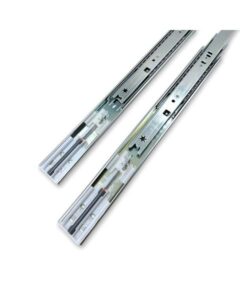
A linear bearing slide is a mechanical system that allows a component or carriage to move along a rail or guide with minimal friction while supporting load. Linear bearing slides are widely used in CNC machines, 3D printers, industrial robots, packaging equipment, and automated assembly lines.
This article provides a comprehensive guide to linear bearing slides, covering their structure, working principle, types, advantages, applications, materials, selection criteria, and maintenance practices.

What Is a Linear Bearing Slide?
A linear bearing slide is a mechanical assembly that enables linear motion along a fixed path with high precision and minimal friction.
Key components of a linear bearing slide include:
Rail/Guide – A precision-machined track that provides a path for linear motion.
Slide/Carriage – A block or platform that moves along the rail while supporting loads.
Rolling Elements – Balls or rollers inside the slide that reduce friction and ensure smooth motion.
Unlike traditional sliding systems, linear bearing slides use recirculating rolling elements that allow higher speeds, greater load capacity, and longer service life.
Structure of a Linear Bearing Slide
A standard linear bearing slide consists of the following components:
Rail (Guide Track)
Constructed from hardened steel, stainless steel, or aluminum.
Provides a rigid and straight path for the slide.
Designed to carry radial, axial, and moment loads.
Slide/Carriage
Moves along the rail while supporting the load.
Contains recirculating rolling elements such as balls or rollers.
Ensures stability, precision, and smooth motion.
Rolling Elements (Balls or Rollers)
Reduce friction by rolling between the slide and the rail.
Distribute the load evenly across the system.
Enable high-speed and high-precision motion.
Optional components may include end caps, seals, wipers, and lubrication ports to protect against dust, debris, and contamination.
Working Principle of Linear Bearing Slides
Linear bearing slides operate on the principle of rolling friction:
The slide moves along the rail, guided by rolling elements.
Balls or rollers inside the slide recirculate continuously, converting sliding friction into low-friction rolling motion.
The system supports multi-directional loads while maintaining smooth, precise linear motion.
This design minimizes wear, vibration, and energy loss while maximizing accuracy and reliability.
Linear bearing slides are particularly suited for CNC machines, industrial robots, 3D printers, and precision automation systems.
Types of Linear Bearing Slides
Linear bearing slides are available in several designs to accommodate different industrial requirements:
1. Ball-Type Linear Bearing Slides
Uses recirculating ball bearings for smooth and precise motion.
Common in CNC machines, 3D printers, and light to medium automation equipment.
2. Roller-Type Linear Bearing Slides
Uses cylindrical or needle rollers instead of balls.
Can handle heavier loads and offers higher rigidity.
Suitable for industrial presses, heavy CNC machines, and large automation systems.
3. Profile Rail Linear Bearing Slides
Compact carriage with integrated recirculating elements.
Provides multi-directional load support and high stability.
Used widely in robotics, CNC machining, and automated assembly lines.
4. Miniature Linear Bearing Slides
Designed for compact machinery and precision instruments.
Common in medical devices, laboratory automation, and electronics assembly.
5. Aluminum Linear Bearing Slides
Lightweight, corrosion-resistant, often anodized for durability.
Ideal for robots, 3D printers, and weight-sensitive applications.
6. Round Shaft Linear Bearing Slides
Uses cylindrical rails and linear bushings.
Simpler design, suitable for light loads and cost-sensitive applications.
Advantages of Linear Bearing Slides
Linear bearing slides provide numerous benefits over conventional sliding systems:
High Precision – Ensures accurate and repeatable linear motion.
Low Friction – Rolling elements reduce energy loss and wear.
High Load Capacity – Supports radial, axial, and moment loads efficiently.
Smooth Operation – Minimizes vibration and noise.
Durability – Long service life due to optimized load distribution.
Versatility – Applicable to CNC machines, industrial robots, 3D printers, packaging machines, and heavy machinery.
Ease of Installation & Maintenance – Modular designs and lubrication ports simplify setup.
Applications of Linear Bearing Slides
Linear bearing slides are widely used wherever smooth, precise, and repeatable motion is required:
CNC Machines – Precision milling, cutting, and engraving.
3D Printers – Smooth movement of print heads and build platforms.
Industrial Robots – Linear actuators for pick-and-place and assembly.
Packaging Machinery – Accurate filling, labeling, and material handling.
Medical Equipment – Laboratory automation and imaging devices.
Semiconductor Manufacturing – High-precision stages for wafer handling.
Heavy Machinery – Presses, large CNC machines, and automation requiring rigidity.
Materials Used in Linear Bearing Slides
Material selection affects precision, load capacity, and durability:
Hardened Steel – High strength and wear resistance, ideal for heavy-duty applications.
Stainless Steel – Corrosion-resistant, suitable for medical, food, and chemical environments.
Aluminum Alloy – Lightweight and corrosion-resistant for robots, 3D printers, and portable machinery.
Composite or Coated Materials – Reduce friction and wear in specialized industrial environments.
How to Choose the Right Linear Bearing Slide
Consider these factors when selecting a linear bearing slide:
Load Capacity – Must support static, dynamic, and moment loads.
Precision Requirements – High-accuracy applications require tight tolerances.
Travel Distance – Ensure the rail length meets motion requirements.
Environment – Stainless steel or sealed slides are needed for dusty, humid, or corrosive conditions.
Speed & Acceleration – Ensure smooth motion at operational speeds.
Maintenance Requirements – Self-lubricating or easy-to-lubricate slides reduce downtime.
Space Constraints – Miniature or compact slides may be required for limited installations.
Installation and Maintenance Guidelines
Proper installation and maintenance are critical for performance and longevity:
Alignment – Mount rails on flat, rigid surfaces with precise alignment.
Lubrication – Rolling elements require regular lubrication to prevent wear.
Cleaning – Keep rails and slides free of dust, debris, and contaminants.
Inspection – Periodically check for wear, looseness, or damage.
Replacement – Replace worn or damaged components promptly.
Following these practices ensures smooth motion, high precision, and long service life.
Future Trends in Linear Bearing Slides
Linear bearing slide technology is evolving rapidly:
Smart Slides – Integrated sensors for load, position, and temperature monitoring.
Low-Friction Coatings – Advanced coatings reduce wear and improve energy efficiency.
Lightweight Designs – Aluminum and composite slides reduce weight without sacrificing strength.
IoT-Integrated Systems – Real-time monitoring for predictive maintenance.
Hybrid Materials – Combining steel and aluminum for lightweight, high-strength solutions.
These advancements improve precision, durability, and automation performance.
Frequently Asked Questions (FAQs)
1. What is a linear bearing slide?
A linear bearing slide is a mechanical system consisting of a rail and a bearing carriage that enables smooth, precise linear motion.
2. What types of linear bearing slides are available?
Types include ball-type, roller-type, profile rail, miniature, aluminum, and round shaft slides.
3. Where are linear bearing slides used?
Applications include CNC machines, 3D printers, robotics, packaging machinery, medical equipment, and heavy machinery.
4. Can linear bearing slides support heavy loads?
Yes, particularly roller-type and profile rail slides, which are designed for high radial, axial, and moment loads.
5. Do linear bearing slides require maintenance?
Yes. Regular lubrication, cleaning, and inspection are essential for smooth motion and long service life.
6. What materials are used for linear bearing slides?
Hardened steel, stainless steel, aluminum alloys, and composites, depending on load, precision, and environment.

Conclusion
A linear bearing slide is a crucial component in modern machinery, providing precise, smooth, and low-friction linear motion.
By supporting loads, reducing friction, and maintaining alignment, linear bearing slides improve efficiency, precision, and durability across industries such as CNC machining, robotics, 3D printing, packaging, medical equipment, and heavy machinery.
Proper selection, installation, and maintenance are essential to achieve optimal performance and long service life. With ongoing advancements in materials and smart technology, linear bearing slides will continue to play a vital role in precision engineering and industrial automation.