

Introduction
As manufacturing, automation, and precision engineering continue to evolve, the demand for accurate, stable, and repeatable linear motion has never been higher. At the heart of this motion lies one of the most essential mechanical components used across industries: linear guide rail systems.
Linear guide rail systems are designed to guide moving machine parts along a straight path while supporting loads and minimizing friction. From CNC machining centers and industrial robots to packaging machines, medical equipment, and semiconductor production, these systems play a vital role in ensuring precision, efficiency, and reliability.
This article provides a comprehensive overview of linear guide rail systems, covering their structure, working principles, types, materials, advantages, applications, selection criteria, and maintenance best practices.
What Are Linear Guide Rail Systems?
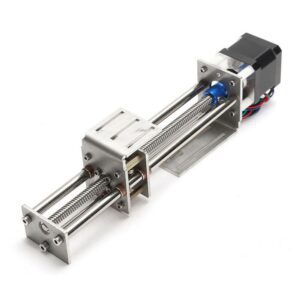
A linear guide rail system is a mechanical assembly that allows components to move linearly with high accuracy and low friction. It typically consists of:
Linear guide rails (fixed tracks)
Bearing carriages or blocks (moving elements)
Rolling elements (balls or rollers inside the carriage)
Unlike traditional sliding mechanisms, linear guide rail systems rely on rolling contact, which significantly reduces friction, wear, and energy loss. This design enables smooth motion, high load capacity, and long service life.
Core Components of a Linear Guide Rail System
1. Linear Guide Rail
The rail is a precision-machined track mounted to the machine frame. It provides a rigid reference surface that ensures straight and stable motion. Rails are typically heat-treated for wear resistance and dimensional stability.
2. Bearing Carriage (Slider or Block)
The carriage moves along the rail and supports the applied load. It houses the rolling elements and is designed to maintain alignment while handling forces from multiple directions.
3. Rolling Elements
Rolling elements reduce friction and allow smooth movement. Depending on the system design, these can be:
Steel balls for speed and precision
Cylindrical rollers for higher load capacity and rigidity
4. Seals, Wipers, and Lubrication Ports
These components protect the internal bearing system from contamination and ensure consistent lubrication, which is critical for long-term performance.
How Linear Guide Rail Systems Work
Linear guide rail systems operate using the principle of recirculating rolling motion:
The carriage moves along the rail under load.
Rolling elements circulate within internal tracks inside the carriage.
Rolling contact replaces sliding friction, reducing resistance.
The system maintains accurate alignment even under dynamic loads.
This mechanism allows linear guide rail systems to support radial, axial, and moment loads simultaneously, making them suitable for complex and demanding applications.
Types of Linear Guide Rail Systems
1. Ball-Type Linear Guide Rail Systems
Use recirculating steel balls
Low friction and high precision
Ideal for CNC machines, 3D printers, and automation equipment
2. Roller-Type Linear Guide Rail Systems
Use cylindrical or needle rollers
Higher rigidity and load capacity
Suitable for heavy-duty machinery and large industrial systems
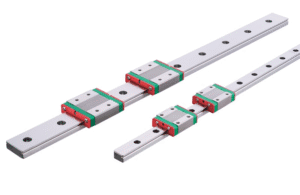
3. Profiled Linear Guide Rail Systems
Compact rail and block design
Supports multi-directional loads
Common in robotics and high-speed automation
4. Miniature Linear Guide Rail Systems
Small size and lightweight
Designed for limited spaces
Used in medical devices, electronics, and laboratory equipment
5. Aluminum Linear Guide Rail Systems
Lightweight and corrosion-resistant
Often anodized
Popular in robotics, 3D printing, and portable machinery
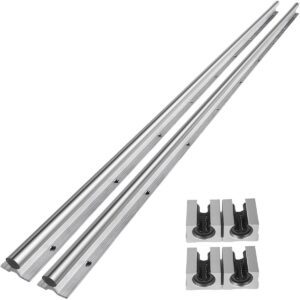
6. Round Rail Linear Guide Systems
Cylindrical rails with linear bushings
Cost-effective solution
Best for light loads and low-speed applications
Key Advantages of Linear Guide Rail Systems
High Precision and Repeatability
Linear guide rail systems maintain tight tolerances, making them ideal for precision machining and automated processes.
Low Friction and Smooth Motion
Rolling contact reduces friction, leading to quieter operation and improved energy efficiency.
High Load Capacity
Advanced designs allow systems to support combined loads from multiple directions.
Long Service Life
Reduced wear and proper lubrication contribute to extended operational life.
Excellent Rigidity
High stiffness minimizes deflection, improving machining accuracy.
Versatility
Compatible with a wide range of industrial applications and environments.
Applications of Linear Guide Rail Systems
Linear guide rail systems are widely used across multiple industries:
CNC machining centers
Industrial robots and automation systems
Packaging and labeling machines
Semiconductor manufacturing equipment
Medical and laboratory automation
Laser cutting and engraving machines
Material handling systems
Textile and printing machinery
Their adaptability and performance make them indispensable in modern manufacturing.
Materials Used in Linear Guide Rail Systems
Hardened Carbon Steel
High strength and wear resistance
Most common material for industrial use
Stainless Steel
Corrosion-resistant
Ideal for food, medical, and cleanroom environments
Aluminum Alloys
Lightweight and corrosion-resistant
Used where weight reduction is critical
Special Coatings
Anti-corrosion, low-friction, or wear-resistant coatings
Improve performance in harsh environments
How to Choose the Right Linear Guide Rail System
Selecting the correct system depends on several factors:
Load Requirements – Consider static, dynamic, and moment loads
Precision Level – Match rail accuracy grade to application needs
Speed and Acceleration – Ensure compatibility with motion requirements
Environmental Conditions – Dust, moisture, and chemicals affect material choice
Installation Space – Compact systems for tight layouts
Maintenance Needs – Ease of lubrication and sealing options
Cost vs. Performance – Balance budget and long-term reliability
Installation Best Practices
Ensure mounting surfaces are flat and rigid
Align rails precisely to prevent binding
Use recommended torque values for fasteners
Apply proper lubrication before operation
Follow manufacturer installation guidelines closely
Correct installation is essential to achieving the system’s rated accuracy and lifespan.
Maintenance and Service Guidelines
Regular maintenance ensures optimal performance:
Inspect rails and carriages for wear or contamination
Clean surfaces to prevent debris buildup
Re-lubricate according to operating conditions
Monitor noise or vibration as early warning signs
Replace worn components promptly
Preventive maintenance significantly extends system life and reduces downtime.
Future Trends in Linear Guide Rail Systems
The linear motion industry continues to evolve with innovations such as:
Smart linear guides with integrated sensors
IoT-based condition monitoring
Advanced low-friction coatings
Lightweight hybrid material designs
Maintenance-free and self-lubricating systems
These advancements support the growth of Industry 4.0 and smart manufacturing.
Frequently Asked Questions (FAQs)
What is a linear guide rail system used for?
It provides precise, low-friction linear motion for machines and automation equipment.
What is the difference between ball and roller guide rails?
Ball guides offer higher speed and precision, while roller guides provide greater load capacity and rigidity.
How long do linear guide rail systems last?
With proper installation and maintenance, they can operate reliably for many years.
Can linear guide rail systems handle heavy loads?
Yes, especially roller-type and high-rigidity profile rail systems.
Do linear guide rails require lubrication?
Yes, lubrication is essential to reduce wear and maintain smooth operation.
Conclusion
Linear guide rail systems are a cornerstone of modern precision machinery. Their ability to provide smooth, accurate, and reliable linear motion makes them indispensable in CNC machining, robotics, automation, and advanced manufacturing.
By understanding system types, materials, installation practices, and maintenance requirements, engineers and manufacturers can select the optimal linear guide rail system for their specific application. As technology advances, these systems will continue to evolve, supporting higher precision, greater efficiency, and smarter manufacturing solutions.