

Introduction
In precision machinery and automated systems, controlled linear motion is essential for accuracy, repeatability, and efficiency. One of the most fundamental components used to achieve this motion is the linear guide shaft.
A linear guide shaft—also known as a linear shaft or guide rod—is a precision-ground cylindrical shaft that works with linear bearings to guide moving components along a straight path. These shafts are widely used in CNC machines, automation equipment, packaging systems, medical devices, robotics, and 3D printers.
This article provides a detailed overview of linear guide shafts, covering their structure, working principles, types, materials, advantages, applications, selection criteria, and maintenance best practices.

What Is a Linear Guide Shaft?
A linear guide shaft is a straight, cylindrical rod designed to provide accurate linear guidance when paired with linear bearings such as ball bushings or slide bearings. Unlike profile rail systems, linear guide shafts typically use round geometry, making them simple, cost-effective, and easy to install.
The primary functions of a linear guide shaft include:
Guiding linear motion along a defined path
Supporting loads applied by moving components
Maintaining alignment and stability
Reducing friction when used with rolling or sliding bearings
Linear guide shafts are commonly used where moderate precision, smooth motion, and cost efficiency are required.
Core Components of a Linear Guide Shaft System
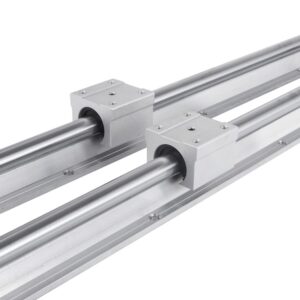
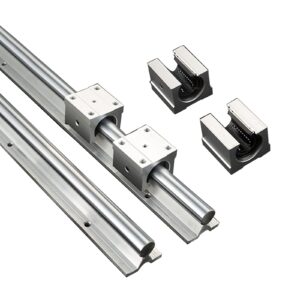
A complete linear guide shaft system usually consists of:
1. Guide Shaft (Linear Shaft)
Precision-ground cylindrical rod
Acts as the guiding surface for linear bearings
Typically hardened and polished for wear resistance
2. Linear Bearings
Ball bushings or slide bearings that move along the shaft
Reduce friction and support applied loads
3. Shaft Supports or Mounts
Fixed supports that hold the shaft in place
Prevent bending and maintain alignment
4. End Supports or Flanges
Secure the shaft and simplify installation
How Linear Guide Shafts Work
Linear guide shafts operate on the principle of rolling or sliding contact:
The shaft remains fixed in position.
Linear bearings move along the shaft surface.
Rolling elements (balls) or low-friction materials reduce resistance.
Motion is guided accurately along the shaft axis.
This system provides smooth linear travel while keeping the moving component aligned and stable.
Types of Linear Guide Shafts
1. Hardened Steel Linear Guide Shafts
Most common type
High wear resistance and strength
Suitable for industrial applications
2. Stainless Steel Linear Guide Shafts
Excellent corrosion resistance
Ideal for food, medical, and cleanroom environments
3. Induction-Hardened Linear Shafts
Hardened outer surface with tough core
High durability under repetitive motion
4. Chrome-Plated Linear Guide Shafts
Enhanced surface hardness and corrosion protection
Reduced friction and extended lifespan
5. Aluminum Linear Guide Shafts
Lightweight and corrosion-resistant
Used in low-load or portable equipment
Linear Guide Shaft vs. Linear Guide Rail
| Feature | Linear Guide Shaft | Linear Guide Rail |
|---|---|---|
| Shape | Round | Rectangular |
| Load Capacity | Moderate | High |
| Installation | Simple | Requires precise mounting |
| Cost | Lower | Higher |
| Precision | Medium | High |
| Typical Use | Light to medium loads | High-precision CNC |
Linear guide shafts are preferred when simplicity and cost efficiency are more important than extreme precision.
Materials Used in Linear Guide Shafts
Carbon Steel
High strength and wear resistance
Most widely used material
Stainless Steel
Corrosion resistant
Suitable for harsh environments
Aluminum Alloy
Lightweight
Lower load capacity
Surface Treatments
Hard chrome plating
Black oxide coating
Anti-corrosion coatings
Material selection depends on load, environment, speed, and expected service life.
Advantages of Linear Guide Shafts
Simple design and easy installation
Cost-effective compared to profile rail systems
Smooth and quiet operation
Compatible with various linear bearings
Flexible shaft lengths and mounting options
Suitable for light to medium loads
Limitations of Linear Guide Shafts
While linear guide shafts offer many benefits, they also have limitations:
Lower load capacity compared to profile rails
Less rigidity for long travel lengths
Not ideal for high-precision CNC machining
Shaft deflection may occur under heavy loads
Understanding these limitations helps in selecting the right system.
Applications of Linear Guide Shafts
Linear guide shafts are used across many industries:
3D printers
Packaging machinery
CNC routers (light duty)
Automated assembly lines
Medical and laboratory equipment
Robotics and linear actuators
Textile and printing machinery
DIY automation and prototyping
How to Choose the Right Linear Guide Shaft
When selecting a linear guide shaft, consider:
Load Capacity – Static and dynamic loads
Shaft Diameter – Larger diameters provide higher stiffness
Shaft Length – Longer shafts require additional support
Bearing Type – Ball bushing or slide bearing
Environmental Conditions – Corrosion, dust, humidity
Precision Requirements – Tolerance and straightness
Mounting Method – Supported or unsupported shafts
Installation Best Practices
Ensure mounting surfaces are flat and aligned
Use shaft supports for long spans
Avoid bending during installation
Match bearing size precisely to shaft diameter
Apply lubrication as recommended
Proper installation greatly affects performance and lifespan.
Maintenance and Care
Keep shafts clean and free of debris
Lubricate regularly to reduce wear
Inspect for surface damage or corrosion
Replace worn bearings promptly
Routine maintenance ensures smooth operation and extended service life.
Future Trends in Linear Guide Shaft Technology
Self-lubricating linear bearings
Lightweight composite shafts
Improved corrosion-resistant coatings
Integration with compact automation modules
These innovations continue to expand the use of linear guide shafts in modern automation.
Frequently Asked Questions (FAQs)
What is a linear guide shaft used for?
It guides linear motion in machines using linear bearings for smooth, controlled movement.
What material is best for linear guide shafts?
Hardened steel is most common; stainless steel is best for corrosive environments.
Can linear guide shafts support heavy loads?
They support moderate loads; heavy loads require larger diameters or profile rails.
Do linear guide shafts require lubrication?
Yes, regular lubrication reduces wear and improves motion smoothness.
What is the difference between supported and unsupported shafts?
Supported shafts offer higher rigidity, while unsupported shafts allow longer free spans.
Conclusion
A linear guide shaft is a simple yet highly effective solution for achieving smooth, stable, and cost-efficient linear motion. While it may not match the extreme precision of profile rail systems, it remains an excellent choice for light to medium-duty applications across automation, robotics, packaging, and medical equipment.
By selecting the correct material, diameter, and support configuration—and maintaining it properly—linear guide shafts can deliver reliable performance, long service life, and excellent value in modern mechanical systems.