

Comprehensive Outline
| Main Topics | Detailed Coverage |
|---|---|
| Rails and Rollers Overview | Definition and industrial importance |
| Evolution of Rails and Rollers | From sliding motion to rolling systems |
| Working Principles | Linear guidance fundamentals |
| Core Components | Rails, rollers, carriages |
| Materials Used | Steel grades and durability |
| Heat Treatment and Surface Finish | Wear and corrosion resistance |
| Load Capacity and Force Distribution | Static and dynamic loads |
| Precision and Motion Accuracy | Repeatability and stability |
| Types of Rails | Ball rails, roller rails, slide rails |
| Types of Rollers | Cylindrical, cam, crossed rollers |
| Rails and Rollers vs Slideways | Performance comparison |
| Installation Requirements | Mounting and alignment |
| Lubrication Systems | Oil and grease methods |
| Maintenance and Service Life | Reliability management |
| Noise and Vibration Control | Smooth operation |
| CNC Machine Applications | Milling and machining centers |
| Automation and Robotics | Gantry and pick-and-place systems |
| Heavy Industrial Machinery | Load-intensive environments |
| Conveyor and Handling Systems | Continuous motion |
| Selecting the Right Rails and Rollers | Technical considerations |
| Common Selection Mistakes | Oversizing and misalignment |
| Cost Efficiency and ROI | Long-term value |
| YH Linear Rails and Rollers | Brand strengths |
| Future Trends | Smart and integrated motion systems |
Introduction
Smooth, controlled motion is the backbone of modern machinery. At the core of this motion are rails and rollers, two mechanical elements that work together to guide loads accurately and efficiently. From CNC machines to automated production lines, rails and rollers ensure that movement remains stable, repeatable, and reliable.
At YH Linear, extensive experience in linear motion engineering has shown that properly matched rails and rollers dramatically improve machine performance. Poor selection or installation leads to vibration, wear, and costly downtime. This article provides a complete overview of rails and rollers, explaining how they work, where they are used, and why YH Linear solutions are trusted across industries.
Rails and Rollers
Rails and rollers form a linear motion guidance system where rails provide the guiding path and rollers support and move the load along that path. Unlike sliding motion, rolling motion significantly reduces friction and wear.
Rails are precision-machined tracks, while rollers rotate along these tracks to enable smooth movement. Together, they allow machines to carry heavy loads with minimal resistance and high positional accuracy.
In practical applications, rails and rollers serve as the foundation for stable motion systems, ensuring reliability even under demanding operating conditions.
Evolution of Rails and Rollers Technology
Early machines relied on plain slideways where surfaces rubbed directly against each other. While simple, these systems generated high friction and required constant maintenance.
The introduction of rails and rollers marked a major advancement. Rolling contact replaced sliding contact, dramatically improving efficiency and durability. Over time, precision grinding, advanced materials, and heat treatment further enhanced performance.
Today, rails and rollers represent a mature and highly optimized motion solution used across nearly every industrial sector.
Working Principles of Rails and Rollers
The fundamental principle behind rails and rollers is rolling contact. Rollers rotate along hardened raceways, minimizing resistance and distributing loads evenly.
Load distribution is critical. Rails and rollers are designed to handle vertical loads, lateral forces, and moment loads simultaneously. This balanced design ensures stability under dynamic conditions.
Preload may be applied to eliminate clearance, increasing rigidity and improving positioning accuracy. This principle is especially important in precision machinery.
Core Components of Rails and Rollers Systems
A typical rails and rollers system consists of the rail, rollers, carriage or block, seals, and lubrication channels.
The rail provides a straight, hardened guiding surface. Rollers carry the load and reduce friction. The carriage holds rollers in position and ensures even load distribution.
Seals protect against contamination, while lubrication ensures smooth operation. At YH Linear, each component is manufactured under strict quality standards.
Materials and Surface Treatments
High-quality materials are essential for rails and rollers. Alloy steels with high strength and toughness are commonly used.
Heat treatment processes harden raceways and roller surfaces, improving wear resistance. Surface coatings enhance corrosion protection in harsh environments.
YH Linear rails and rollers are engineered to maintain performance even in demanding industrial conditions.
Load Capacity and Rigidity
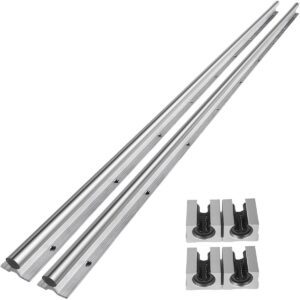
One of the greatest advantages of rails and rollers is their ability to handle heavy loads. Roller-based systems offer line contact, which increases load capacity and rigidity.
High rigidity minimizes deflection under load, improving accuracy and surface finish in machining applications. This makes rails and rollers ideal for CNC machines and heavy automation.
Correct sizing ensures optimal performance. YH Linear provides technical guidance to help customers select the right solution.
Precision and Motion Accuracy
Precision is a defining characteristic of modern rails and rollers systems. Tight manufacturing tolerances and controlled preload deliver excellent repeatability.
Stable motion reduces vibration and noise, enhancing overall machine performance. Over long operating cycles, rails and rollers maintain accuracy and alignment.
For industries where precision defines product quality, these systems are indispensable.
Types of Rails Used in Industry
Rails are available in several types. Ball rails offer low friction and high speed. Roller rails provide higher rigidity and load capacity.
Slide rails serve simpler applications with lower precision requirements. Each type addresses specific performance needs.
YH Linear offers a comprehensive range of rail solutions to meet diverse industrial demands.
Types of Rollers Used in Motion Systems
Rollers come in various forms, including cylindrical rollers, cam rollers, and crossed rollers. Cylindrical rollers are widely used for heavy loads.
Cam rollers support guided motion along tracks. Crossed rollers provide compact design and high precision.
Selecting the right roller type ensures optimal load handling and motion smoothness.
Rails and Rollers vs Traditional Slideways
Compared to slideways, rails and rollers offer lower friction, higher speed, and reduced wear. Slideways, while robust, require more maintenance and lubrication.
Rails and rollers improve energy efficiency and extend service life. For modern machinery, they provide a clear performance advantage.
Installation and Alignment Best Practices
Proper installation is critical for rails and rollers performance. Mounting surfaces must be flat, rigid, and accurately machined.
Precise alignment ensures even load distribution. Misalignment increases wear and reduces accuracy.
Following installation guidelines ensures long-term reliability and performance.
Lubrication and Maintenance
Rails and rollers require consistent lubrication to reduce wear and prevent corrosion. Grease or oil systems are commonly used.
Automatic lubrication systems are recommended for continuous operation. Routine inspection helps detect early signs of wear.
With proper maintenance, rails and rollers operate reliably for years.
Applications of Rails and Rollers
Rails and rollers are used across many industries. CNC machines rely on them for precise axis movement. Automation systems use them in gantries and pick-and-place equipment.
Conveyor systems benefit from their smooth continuous motion. Heavy industrial machinery depends on their load-bearing capability.
Medical and precision equipment also rely on rails and rollers for quiet, accurate movement.
YH Linear Rails and Rollers
YH Linear specializes in high-performance rails and rollers designed for precision, durability, and reliability. Each solution reflects deep industry experience and strict quality standards.
By combining advanced manufacturing with responsive technical support, YH Linear delivers motion systems that perform consistently in real-world applications.
Choosing YH Linear means choosing confidence, stability, and long-term value.
Future Trends in Rails and Rollers Technology
The future of rails and rollers includes smarter systems with integrated sensors for condition monitoring. Improved materials and coatings will further enhance durability.
Compact, high-rigidity designs will support increasingly demanding applications. YH Linear continues to innovate to meet future industrial needs.
FAQs
What are rails and rollers used for?
They guide linear motion with precision and stability.
How do rails and rollers reduce friction?
They use rolling contact instead of sliding contact.
Are rails and rollers suitable for heavy loads?
Yes, especially roller-based systems.
Do rails and rollers require lubrication?
Yes, proper lubrication ensures smooth operation and long service life.
Can rails and rollers improve machine accuracy?
Yes, high rigidity and precision enhance accuracy.
Why choose YH Linear rails and rollers?
YH Linear offers quality manufacturing, technical expertise, and dependable performance.
Conclusion
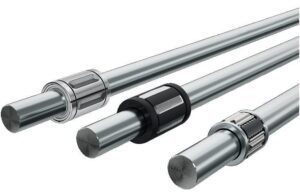
Rails and rollers are essential components in modern motion systems, delivering smooth movement, high load capacity, and precise control. Their role in CNC, automation, and industrial machinery cannot be overstated.
With proven expertise and a commitment to quality, YH Linear continues to support manufacturers worldwide with reliable rails and rollers solutions. Selecting the right system today ensures productivity, precision, and long-term success.
Suggested Internal Links
YH Linear rails and rollers product pages
YH Linear linear motion system solutions
Suggested Outbound Links
Industrial linear motion standards organizations
Automation and machinery design resources