

Introduction
Linear guides are essential components in modern machinery and automation systems, providing smooth, precise, and reliable linear motion. From CNC machines and 3D printers to industrial automation and robotics, they ensure that components move along a controlled path with minimal friction.
However, in many applications—especially light-duty machinery, DIY projects, and cost-sensitive automation—purchasing high-end linear guides may not be practical. This is where cheap linear guides come into play. They provide a cost-effective solution without compromising basic performance for many applications.
This article explores what cheap linear guides are, how they work, the types available, benefits, limitations, applications, and tips for choosing the right one.
What Is a Cheap Linear Guide?
A cheap linear guide is a linear motion system designed to offer the fundamental features of a standard linear guide at a lower cost. Typically, these guides:
Use basic materials or simplified manufacturing processes
May have reduced load capacity
Offer moderate precision suitable for general-purpose applications
Despite being low-cost, cheap linear guides still provide smooth and controlled linear motion, making them suitable for projects where extreme precision or heavy load handling is not required.
How Does a Cheap Linear Guide Work?
Cheap linear guides operate on the same principle as standard linear guides: they guide moving parts along a fixed path while minimizing friction.
Key mechanisms include:
Shaft or Rail – The linear path for motion
Bearing Block or Slide – Moves along the shaft or rail
Rolling or Sliding Elements – Balls, rollers, or low-friction surfaces reduce resistance
The main difference between a cheap linear guide and a premium one is material quality, bearing design, and precision manufacturing.
Types of Cheap Linear Guides
Even within budget options, several types of linear guides are available:
1. Round Shaft Linear Guides
Cylindrical steel shafts paired with linear bushings
Easy to install and cost-effective
Moderate load capacity
Applications: 3D printers, DIY CNC machines, light automation
2. Ball-Type Linear Guides
Use recirculating steel balls for reduced friction
Cheaper versions may have simplified housings and lower precision
Suitable for medium-speed applications
Applications: Automation systems, light CNC machines
3. Miniature Linear Guides
Compact size for small machinery
Lightweight and affordable
Often made of aluminum or low-cost steel
Applications: Electronics assembly, laboratory equipment, compact automation
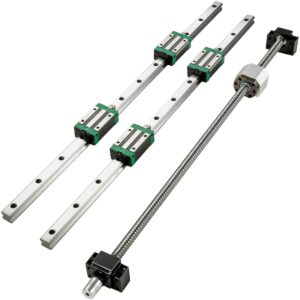
4. Profiled Budget Linear Rails
Square or rectangular rails with basic carriages
Lower rigidity and load rating than premium profiled rails
Provides reasonable smoothness for light-duty tasks
Applications: Light-duty CNC, small conveyors, prototyping machines
Materials Commonly Used in Cheap Linear Guides
Mild Steel – Cost-effective and easy to machine, moderate wear resistance
Aluminum – Lightweight and inexpensive for small systems
Plastic or Polymer Bushings – Reduce friction without high manufacturing cost
Surface Coatings – Minimal hardening or chrome plating to reduce cost
Material choice affects load capacity, durability, and precision.
Advantages of Cheap Linear Guides
Cost-Effective – Affordable for startups, DIY projects, and budget automation
Lightweight and Compact Options – Ideal for small machines
Easy to Replace – Lower cost reduces maintenance expenses
Adequate Performance for Non-Critical Applications – Smooth motion and basic precision
Limitations of Cheap Linear Guides
While cheap linear guides offer value, they come with trade-offs:
Lower Precision – Not suitable for high-accuracy machining
Reduced Load Capacity – Cannot handle heavy or shock loads
Shorter Lifespan – Materials and manufacturing are less robust
Limited Rigidity – May flex under heavier loads
Maintenance Requirements – More frequent lubrication and inspection needed
Understanding these limitations is crucial to prevent damage or performance issues.
Applications of Cheap Linear Guides
Cheap linear guides are widely used in budget-conscious and light-duty applications:
3D Printers – Affordable motion guidance for axes
DIY CNC Machines – Cost-effective linear motion solutions
Light Automation Systems – Packaging, labeling, or small assembly
Laboratory and Medical Equipment – Non-critical positioning systems
Educational and Prototyping Projects – Teaching kits, research experiments
They provide the necessary linear motion without the high cost of industrial-grade guides.
Cheap Linear Guides vs. Premium Linear Guides
| Feature | Cheap Linear Guide | Premium Linear Guide |
|---|---|---|
| Cost | Low | High |
| Precision | Moderate | High |
| Load Capacity | Light to Medium | Medium to Heavy |
| Rigidity | Moderate | High |
| Lifespan | Shorter | Long |
| Maintenance | Frequent | Low |
Choose cheap guides for cost-sensitive, low-load, or educational applications, and premium guides for industrial, high-precision, or heavy-load systems.
Tips for Choosing a Cheap Linear Guide
Determine Load Requirements – Avoid overloading cheap guides
Check Shaft or Rail Quality – Slightly hardened steel or coated surfaces improve durability
Consider Travel Length and Mounting – Ensure alignment and space compatibility
Assess Lubrication Needs – Some cheap guides require regular greasing
Understand Precision Needs – For visual or rough positioning, cheap guides suffice; for machining, choose premium
Maintenance Tips for Cheap Linear Guides
Regularly clean rails and bearings to prevent dust or debris build-up
Lubricate frequently with light oil or grease
Inspect for wear, wobble, or excessive play
Replace components early to maintain smooth motion
Proper care prolongs the lifespan even of budget-friendly guides.
Frequently Asked Questions (FAQs)
1. Can cheap linear guides be used in CNC machines?
Yes, for light-duty CNC machines or hobby projects. They are not suitable for industrial-grade machining.
2. Do cheap linear guides support heavy loads?
No, they are designed for light to medium loads. Roller or premium profiled rails are better for heavy loads.
3. Are cheap linear guides durable?
They are less durable than premium guides but sufficient for non-critical or low-speed applications.
4. Do cheap linear guides require lubrication?
Yes, regular lubrication is necessary to prevent wear and maintain smooth motion.
5. Where are cheap linear guides commonly used?
3D printers, DIY CNC machines, small automation systems, educational kits, and laboratory equipment.
Conclusion
Cheap linear guides provide an affordable solution for linear motion systems, making them ideal for light-duty machines, DIY projects, and cost-sensitive automation. While they do not match industrial-grade guides in precision, rigidity, or load capacity, proper selection and maintenance can deliver reliable performance for many applications.
Understanding the limitations, types, and proper usage of cheap linear guides ensures that your system achieves smooth motion, efficiency, and extended service life without breaking the budget.