

Introduction to Linear Ball Bearing
What is a Linear Ball Bearing?
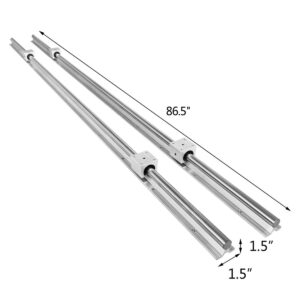
A linear ball bearing is a precision mechanical component designed to provide smooth, low-friction linear motion along a shaft or rail. It uses small steel balls arranged in a circulating pattern inside a cylindrical housing to reduce friction and allow effortless sliding motion.
Unlike traditional bushings that rely on sliding contact, a linear ball bearing uses rolling motion. This drastically reduces resistance, improves accuracy, and increases the lifespan of mechanical systems.
These bearings are widely used in CNC machines, robotics, automation systems, and precision instruments where smooth and accurate linear movement is essential.
Why Linear Ball Bearings Matter in Modern Engineering
In modern engineering, precision and efficiency are non-negotiable. A linear ball bearing helps achieve:
- High-speed motion with minimal resistance
- Accurate positioning in mechanical systems
- Reduced wear and maintenance costs
Without linear ball bearings, many automated systems would suffer from excessive friction, poor accuracy, and reduced efficiency.
Working Principle of Linear Ball Bearing
How Ball Recirculation Works
The core mechanism of a linear ball bearing is ball recirculation. Steel balls move along a closed loop inside the bearing housing. As the shaft moves, the balls roll between the housing and the shaft, allowing smooth motion.
Once the balls reach the end of the load zone, they are guided back through a return channel to repeat the cycle.
Friction Reduction Mechanism
Instead of sliding contact, linear ball bearings rely on rolling contact. This significantly reduces friction, allowing:
- Smoother motion
- Lower energy consumption
- Reduced heat generation
Load Distribution Concept
The load is distributed evenly across multiple balls, preventing localized stress and improving durability.
F=μNF = \mu N
This simplified relationship shows that reducing friction coefficient (μ) directly reduces resistance force (F), which is exactly what linear ball bearings achieve through rolling contact instead of sliding.
Types of Linear Ball Bearing
Open Type Linear Ball Bearing
Open-type bearings are designed with a cut section to allow installation over supported shafts. They are commonly used in guided rail systems.
Closed Type Linear Ball Bearing
Closed-type bearings fully enclose the shaft and provide maximum load support and stability.
Flanged Linear Ball Bearing
Flanged versions include an extended edge for easy mounting and alignment, often used in compact machinery.
Comparison of Types
| Type | Load Capacity | Installation Ease | Application |
|---|---|---|---|
| Open Type | Medium | Easy | Modular systems |
| Closed Type | High | Moderate | Heavy machinery |
| Flanged Type | Medium | Very Easy | Compact systems |
Key Components of Linear Ball Bearing
Outer Cylinder Housing
The outer housing holds all internal components and maintains structural integrity.
Steel Balls and Retainer
Precision steel balls are the core motion elements, held in place by a retainer cage.
Shaft or Linear Rail
The shaft acts as the guiding surface over which the bearing moves.
Seals and Lubrication System
Seals prevent contamination, while lubrication ensures smooth and long-lasting performance.
Advantages of Linear Ball Bearing
High Precision Movement
Linear ball bearings provide extremely accurate linear motion, making them ideal for precision engineering applications.
Low Friction Operation
Because they use rolling elements, friction is significantly reduced compared to sliding systems.
Long Service Life
With proper lubrication and maintenance, these bearings can operate for millions of cycles.
Applications of Linear Ball Bearing
CNC Machinery
Used for precise tool positioning and smooth axis movement in CNC machines.
Industrial Automation
Essential in conveyor systems, robotic arms, and assembly lines.
3D Printing Machines
Enable precise movement of print heads for accurate layer deposition.
Medical and Laboratory Equipment
Used in diagnostic machines and surgical equipment requiring high precision.
Materials Used in Linear Ball Bearing
Stainless Steel Components
Provides corrosion resistance and durability.
Hardened Steel Shafts
Ensures smooth and wear-resistant motion surfaces.
Polymer and Composite Seals
Help reduce contamination and improve sealing performance.
Installation Guidelines
Proper Alignment Techniques
Incorrect alignment can cause uneven wear and reduce performance.
Shaft Fit and Tolerances
Proper fit between shaft and bearing is essential for smooth operation.
Common Installation Mistakes
- Over-tightening housing
- Misaligned shafts
- Inadequate lubrication
Maintenance and Troubleshooting
Lubrication Best Practices
Regular lubrication reduces wear and extends bearing life.
Wear and Failure Symptoms
Signs include noise, vibration, and reduced smooth motion.
Extending Bearing Life
Proper cleaning and lubrication schedules are critical.
Linear Ball Bearing vs Other Linear Systems
Linear Ball Bearing vs Plain Bearings
Linear ball bearings offer lower friction and higher precision than plain bushings.
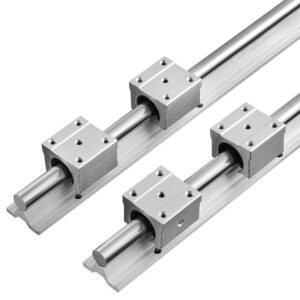
Linear Ball Bearing vs Linear Guides
Linear guides provide higher rigidity, but ball bearings offer smoother motion at lower cost.
Performance Comparison
Ball bearings excel in speed and smoothness, while guides excel in heavy-load rigidity.
Factors to Consider When Choosing Linear Ball Bearing
Load Capacity
Ensure the bearing matches the system’s mechanical load requirements.
Speed and Accuracy Requirements
High-speed applications require precision-grade bearings.
Environmental Conditions
Dust, moisture, and temperature can affect performance.
Future Trends in Linear Ball Bearing Technology
Smart Bearings with Sensors
Future linear ball bearings will include sensors for real-time monitoring of wear and performance.
Advanced Materials and Coatings
New coatings will reduce friction and increase lifespan.
Industry 4.0 Integration
Bearings will become part of smart manufacturing ecosystems with predictive maintenance capabilities.
Frequently Asked Questions (FAQs)
1. What is a linear ball bearing used for?
It is used to provide smooth, low-friction linear motion in mechanical systems.
2. How does a linear ball bearing work?
It uses recirculating steel balls to reduce friction and guide movement along a shaft.
3. What are the types of linear ball bearings?
Open type, closed type, and flanged type are the main variants.
4. Where are linear ball bearings used?
They are used in CNC machines, robotics, automation systems, and 3D printers.
5. What materials are used in linear ball bearings?
Common materials include stainless steel, hardened steel, and polymer seals.
6. How do you maintain linear ball bearings?
Regular lubrication, cleaning, and alignment checks are essential.
Conclusion
Linear ball bearings are essential components in modern mechanical and automation systems. Their ability to deliver smooth, precise, and low-friction motion makes them indispensable in industries ranging from manufacturing to robotics.
As technology advances, linear ball bearings will continue evolving with smarter designs, better materials, and integration into automated systems. Choosing the right bearing and maintaining it properly ensures long-term efficiency, accuracy, and reliability.