

In today’s advanced manufacturing and automation industries, achieving accurate and reliable motion is critical. A linear bearing guide is one of the most essential components used to ensure smooth, precise, and efficient linear movement.
Whether you’re designing CNC machinery, robotics, or automated production lines, understanding how a linear bearing guide works can significantly improve your system’s performance.
What Is a Linear Bearing Guide?
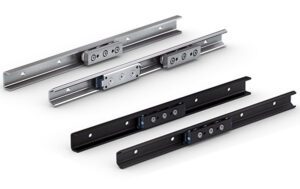
A linear bearing guide is a motion system that enables controlled linear movement along a straight path. It typically consists of a guide rail and a bearing block (or carriage) that moves along the rail using rolling elements such as balls or rollers.
This design minimizes friction while maintaining high precision and load capacity.
How Does a Linear Bearing Guide Work?
The operation of a linear bearing guide is based on rolling motion rather than sliding contact.
Core Components
- Guide Rail – Provides a rigid and straight motion path
- Bearing Block (Carriage) – Moves along the rail
- Rolling Elements – Reduce friction and enable smooth motion
- Sealing System – Protects against dust and contaminants
- Lubrication Mechanism – Ensures long-term efficiency
Working Principle
As the carriage moves, the rolling elements circulate within the bearing block, allowing for consistent, low-friction motion with high accuracy.
10 Proven Benefits of Linear Bearing Guide Systems
1. Exceptional Precision
Ensures accurate positioning for high-performance machinery.
2. Low Friction
Rolling elements significantly reduce resistance.
3. High Load Capacity
Supports both dynamic and static loads effectively.
4. Smooth Operation
Provides vibration-free and quiet movement.
5. Long Service Life
Durable materials extend operational lifespan.
6. High Speed Capability
Suitable for rapid motion applications.
7. Easy Installation
Pre-configured systems simplify integration.
8. High Rigidity
Maintains stability under heavy loads.
9. Versatility
Used across various industries and applications.
10. Energy Efficiency
Reduced friction lowers energy consumption.
Types of Linear Bearing Guide Systems
Choosing the right linear bearing guide depends on your application requirements.
Ball-Type Linear Guides
- High speed and precision
- Ideal for light to medium loads
Roller-Type Linear Guides
- Higher load capacity
- Better rigidity for heavy-duty applications

Miniature Linear Guides
- Compact and lightweight
- Used in precision instruments
Heavy-Duty Linear Guides
- Designed for industrial machinery
- Handles extreme loads and harsh conditions
Applications of Linear Bearing Guide
The linear bearing guide is widely used in modern engineering:
- CNC Machines – Precision cutting and positioning
- Automation Systems – Consistent and repeatable motion
- Robotics – Smooth and accurate movement
- Medical Equipment – Quiet and reliable operation
- Semiconductor Manufacturing – Ultra-high precision requirements
👉 Discover high-quality solutions for your application here:
https://yhlinear.com/product
How to Choose the Right Linear Bearing Guide
Selecting the right linear bearing guide is essential for optimal performance.
Load Requirements
Calculate both static and dynamic loads.
Accuracy Needs
High-precision applications require tighter tolerances.
Speed and Acceleration
Ensure compatibility with motion requirements.
Environmental Conditions
Choose corrosion-resistant or sealed models if needed.
Mounting Configuration
Verify compatibility with your system design.
For deeper technical knowledge, visit this trusted resource:
👉 https://www.thk.com/?q=us/node/595
Installation Tips for Linear Bearing Guide Systems
Proper installation ensures efficiency and longevity:
- Align rails accurately
- Use proper fastening torque
- Apply lubrication before use
- Avoid contamination during assembly
Maintenance Best Practices
To extend the lifespan of your linear bearing guide:
- Perform regular lubrication
- Clean rails and carriages
- Inspect for wear and damage
- Replace seals when necessary
Linear Bearing Guide vs Traditional Sliding Systems
| Feature | Linear Bearing Guide | Sliding System |
|---|---|---|
| Friction | Low | High |
| Precision | High | Moderate |
| Lifespan | Long | Short |
| Maintenance | Moderate | High |
Future Trends in Linear Bearing Guide Technology
The future of linear bearing guide systems includes:
- Smart monitoring and predictive maintenance
- Lightweight composite materials
- Integration with Industry 4.0 systems
- Increased demand in robotics and automation
FAQs About Linear Bearing Guide
1. What is a linear bearing guide used for?
It is used to provide precise and smooth linear motion in machinery and automation systems.
2. What is the difference between ball-type and roller-type guides?
Ball-type guides offer higher speed, while roller-type guides provide higher load capacity.
3. Are linear bearing guides suitable for heavy loads?
Yes, especially roller-type and heavy-duty models.
4. Do linear bearing guides require maintenance?
Yes, regular lubrication and cleaning are essential.
5. What industries use linear bearing guides?
CNC, robotics, medical, and semiconductor industries widely use them.
6. Where can I buy reliable linear bearing guides?
Explore high-quality options here:
👉 https://yhlinear.com/product
Conclusion
A linear bearing guide is a fundamental component in modern motion systems, delivering precision, efficiency, and reliability. Whether you’re building advanced automation equipment or upgrading existing machinery, selecting the right guide system can significantly enhance performance.
For premium products and expert solutions, visit:
👉 https://yhlinear.com/product