Introduction
In modern machinery, automation systems, and robotics, precision linear motion is critical. One of the key components that enable smooth, accurate motion is the aluminum linear rail.
An aluminum linear rail provides lightweight, durable, and precise guidance for moving parts in machines, making it ideal for applications where weight reduction, corrosion resistance, and moderate load capacity are required. It is widely used in CNC machines, 3D printers, automation equipment, and industrial robotics.
This article explores the structure, working principle, advantages, and applications of aluminum linear rails, helping you understand why they are preferred in many modern industrial setups.

What Is an Aluminum Linear Rail?
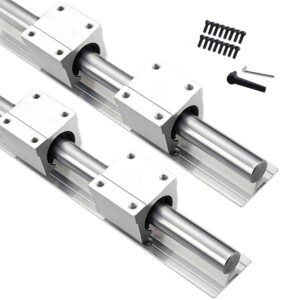
An aluminum linear rail is a type of linear motion guide made primarily from aluminum alloy. It consists of a rail and carriage (slider) system, allowing parts to move along a straight path with minimal friction.
Unlike steel linear rails, aluminum linear rails are lighter and often used where weight saving and corrosion resistance are more important than extreme load capacity. They typically feature rolling elements, such as balls or rollers, to reduce friction and improve precision.
Structure of an Aluminum Linear Rail
A typical aluminum linear rail system has three main components:
Aluminum Rail (Track)
Made from high-strength aluminum alloy.
Lightweight and corrosion-resistant.
Provides a smooth and precise path for the slider.
Carriage (Slider/Block)
Moves along the rail with low friction.
Houses rolling elements like balls or rollers.
Supports moving machinery parts.
Rolling Elements
Recirculating balls or rollers reduce friction by rolling instead of sliding.
Ensure smooth and consistent motion.
Additional features may include end caps, lubrication ports, or protective seals to enhance durability and reduce contamination from dust or debris.
How Aluminum Linear Rails Work
Aluminum linear rails operate using the principle of rolling friction.
The carriage moves along the rail, supported by balls or rollers inside.
The rolling elements convert sliding friction into rolling friction, drastically reducing wear and improving smoothness.
The rail and carriage system ensures linear motion with high repeatability, precision, and low deflection.
Because aluminum is lighter than steel, the system requires less energy to move and can improve the overall efficiency of automated equipment.
Types of Aluminum Linear Rails
Aluminum linear rails come in different designs for various applications:
Standard Aluminum Linear Rail
Lightweight, moderate load capacity.
Suitable for 3D printers, light CNC machines, and inspection systems.
Profile Rail with Aluminum Body
Incorporates a profiled aluminum rail with integrated mounting holes.
Offers easier installation and better rigidity.
Compact or Miniature Aluminum Linear Rails
Designed for small, lightweight machines like lab automation devices or medical equipment.
Provides precise motion without excessive weight.
Hardened Aluminum Linear Rails
Aluminum rail with a hard anodized surface to improve wear resistance.
Ideal for higher-speed motion and moderately heavy loads.
Advantages of Aluminum Linear Rails
Aluminum linear rails offer several benefits, making them an attractive choice for modern machinery:
Lightweight – Reduces the overall weight of machines, improving energy efficiency.
Corrosion Resistance – Aluminum naturally resists oxidation and can be anodized for extra protection.
Cost-Effective – Less expensive than steel linear rails for moderate-load applications.
Precision – Provides smooth and accurate linear motion.
Low Maintenance – Rolling elements minimize wear; periodic lubrication ensures long life.
Easy Installation – Lightweight and often pre-drilled with mounting holes.
Versatility – Compatible with a wide range of machinery, from light automation to medium-duty CNC equipment.
Applications of Aluminum Linear Rails
Aluminum linear rails are widely used in applications where weight, moderate load, and corrosion resistance are important:
3D Printers – Lightweight and precise movement of print heads.
CNC Routers – Supporting lighter milling, engraving, or laser cutting operations.
Pick-and-Place Machines – Smooth motion for electronics assembly.
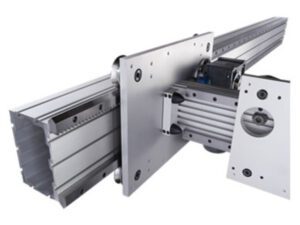
Automation Equipment – Conveyor systems, robotic arms, and inspection stations.
Medical Devices – Laboratory automation, diagnostic equipment, and imaging devices.
Packaging Machinery – Lightweight linear guidance for filling, labeling, and sorting.
How to Choose the Right Aluminum Linear Rail
Selecting the right aluminum linear rail depends on several factors:
Load Capacity – Ensure the rail and carriage can support the weight of the moving parts.
Precision Requirements – High-precision applications require tighter tolerances and smoother ball circulation.
Travel Distance – Choose the rail length to match your application’s range of motion.
Environmental Conditions – For dusty or corrosive environments, choose sealed or anodized rails.
Speed and Acceleration – Confirm the system can handle required movement speeds without vibration.
Maintenance and Lubrication – Ensure easy access for periodic lubrication if required.
Frequently Asked Questions (FAQs)
1. What is the main difference between aluminum and steel linear rails?
Aluminum rails are lighter and corrosion-resistant but have lower load capacity compared to steel rails. They are ideal for applications where weight and environmental resistance are priorities.
2. Can aluminum linear rails carry heavy loads?
They are suitable for light to medium loads. For very heavy machinery, steel linear rails are recommended.
3. Are aluminum linear rails precise?
Yes. When properly manufactured and installed, they provide smooth, precise, and repeatable motion, suitable for most light-to-medium industrial applications.
4. Do aluminum linear rails require maintenance?
Yes, periodic lubrication is recommended to ensure smooth operation and prevent wear, especially in dusty or high-speed environments.
5. Can aluminum linear rails be used outdoors?
Yes, particularly if they are anodized or coated to resist corrosion. Sealed carriages are recommended for dusty or humid conditions.
6. Where are aluminum linear rails most commonly used?
They are widely used in 3D printers, CNC routers, pick-and-place machines, automation lines, packaging equipment, and medical devices.
Conclusion
Aluminum linear rails are essential components in modern machinery, providing lightweight, precise, and corrosion-resistant linear motion.
They are ideal for medium-load applications, from CNC machines and 3D printers to automation and medical equipment.
Choosing the right aluminum linear rail depends on load, precision, environment, and travel requirements. With proper selection, installation, and maintenance, aluminum linear rails can significantly improve accuracy, efficiency, and longevity of your machinery.