

Outline for the Article on “Aluminum Linear Rail”
| Main Topic | Sub-Topics |
|---|---|
| Introduction to Aluminum Linear Rail | What is an aluminum linear rail?, Origins of linear rail systems, Importance of aluminum in engineering |
| Fundamentals of Aluminum Linear Rail | Core components, How aluminum linear rails function, Role in linear motion |
| Types of Aluminum Linear Rails | V-slot rails, T-slot rails, Compact rails, Custom profiles |
| Properties of Aluminum Linear Rail | Lightweight design, Corrosion resistance, Thermal stability, Machinability |
| Aluminum vs Steel Linear Rails | Weight differences, Cost analysis, Load capacity comparison, Environmental impact |
| Manufacturing Process of Aluminum Linear Rails | Extrusion, Machining, Surface treatments, Anodizing |
| Applications of Aluminum Linear Rail | 3D printers, CNC machines, Robotics, Automotive, Aerospace, DIY projects |
| Benefits of Aluminum Linear Rail | Lightweight strength, Easy customization, Corrosion resistance, Cost-effectiveness |
| Limitations of Aluminum Linear Rail | Load handling limits, Wear resistance, Thermal expansion, Cost vs performance |
| Installation of Aluminum Linear Rails | Tools needed, Step-by-step process, Common mistakes |
| Maintenance and Care | Cleaning, Lubrication, Wear checks, Preventing misalignment |
| Innovations in Aluminum Linear Rails | Smart rails, Nano-coatings, Hybrid aluminum-ceramic designs |
| Choosing the Right Aluminum Linear Rail | Load capacity needs, Speed and accuracy, Budget considerations |
| Troubleshooting Issues | Noise problems, Wear patterns, Misalignment, Surface damage |
| Aluminum Linear Rails in CNC Machines | Advantages, Limitations, Use cases |
| Aluminum Linear Rails in 3D Printing | Precision role, Lightweight design, Customization |
| Aluminum Linear Rails in Robotics | Enabling automation, Lightweight efficiency, Repeatability |
| Environmental Impact | Recycling aluminum, Sustainability, Eco-friendly coatings |
| Future of Aluminum Linear Rails | AI integration, Predictive monitoring, Advanced alloys |
| Case Studies | Success in aerospace, DIY maker projects, Automotive innovations |
| Standards and Certifications | ISO standards, Safety benchmarks, Quality assurance |
| Frequently Asked Questions | Addressing common concerns |
| Conclusion | Key takeaways, Final thoughts |
| Suggested Inbound & Outbound Links | Internal links, External references |
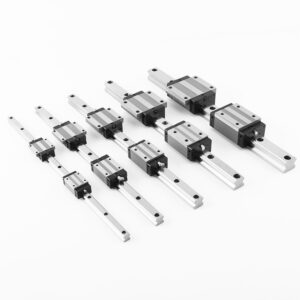
Introduction to Aluminum Linear Rail
An aluminum linear rail is a guiding system designed to provide smooth, accurate, and repeatable linear motion while offering the advantages of lightweight construction. As industries continue to push for more efficient and sustainable designs, aluminum has emerged as a preferred material for linear rails, balancing strength, machinability, and corrosion resistance.
The concept of linear rails traces back to early industrial engineering, where steel dominated due to its strength and durability. However, with the rise of lightweight robotics, 3D printers, and portable CNC machines, aluminum linear rails became a practical alternative. Their lower weight makes them easier to transport, install, and integrate into compact systems.
Today, aluminum linear rails are widely used in industries ranging from aerospace to consumer electronics. Their versatility makes them ideal for applications where reducing machine weight without compromising performance is critical.
Fundamentals of Aluminum Linear Rail
At its core, an aluminum linear rail is a structural component that provides a stable path for smooth and accurate linear motion. Unlike simple sliding mechanisms, linear rails integrate with carriages or bearing blocks that travel along the rail with minimal friction. When aluminum is used as the base material, the system gains unique advantages such as reduced weight, ease of machining, and improved resistance to corrosion.
Core Components
Rail profile: The aluminum extrusion shaped into a V-slot, T-slot, or custom channel.
Carriage block: The component that moves along the rail, often containing rollers or bearings.
Fasteners and supports: Mounting hardware that secures the rail to its structure.
Surface treatment: Usually anodized to improve durability and reduce wear.
How Aluminum Linear Rails Function
The rail acts as a track, guiding the movement of the carriage. Depending on the rail design, motion may be supported by ball bearings, rollers, or plain sliders. Aluminum rails ensure that movement remains stable and repeatable, even when lightweight systems are moving at high speeds.
Role in Linear Motion Systems
Aluminum linear rails are particularly important in compact machines such as desktop CNC routers, laser engravers, and 3D printers. They provide the accuracy needed for precision tasks without adding unnecessary bulk or weight. Their machinability also makes them easy to cut, drill, and adapt for custom applications, making them popular in DIY and maker projects.
Types of Aluminum Linear Rails
Aluminum linear rails come in different designs, each tailored for specific applications. The most common include:
V-Slot Rails
These rails feature a V-shaped groove that allows specially designed wheels to roll smoothly along the surface. They are widely used in 3D printers, CNC routers, and laser engravers because of their simplicity and ease of use.
T-Slot Rails
T-slot profiles are extremely versatile, allowing components to be attached with T-nuts and bolts. They serve both as linear motion rails and as structural framing for modular machines. Their flexibility makes them ideal for prototyping and modular manufacturing setups.
Compact Rails
Designed for space-saving applications, compact aluminum rails are smaller and lighter, making them suitable for lightweight robots, compact automation systems, and portable machinery.
Custom Profiles
Some manufacturers produce custom aluminum rails with hybrid designs that combine roller paths, fastening channels, and integrated cable management. These rails cater to specialized industrial requirements.
The availability of multiple types gives engineers and hobbyists the flexibility to select the exact rail profile that best matches their system’s needs.
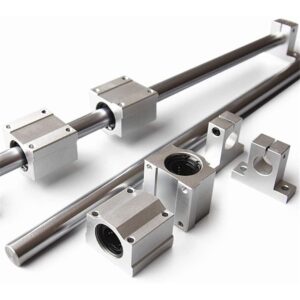
Properties of Aluminum Linear Rail
The unique properties of aluminum make it an excellent choice for linear rails in many applications.
Lightweight Design
Aluminum’s density is about one-third that of steel, making aluminum rails significantly lighter. This property reduces inertia, allowing machines to move faster and more efficiently.
Corrosion Resistance
Unlike untreated steel, aluminum naturally forms a protective oxide layer that resists rust. With anodizing, this protection is further enhanced, making aluminum rails suitable for humid or chemical-exposed environments.
Thermal Stability
Aluminum conducts heat well, which helps dissipate thermal buildup during high-speed operations. However, it expands more with temperature changes than steel, which can be a concern in ultra-precision environments.
Machinability and Customization
One of aluminum’s greatest strengths is its ease of machining. It can be cut, drilled, tapped, and shaped without specialized equipment, making aluminum rails easy to modify for custom projects.
Together, these properties position aluminum linear rails as a cost-effective and adaptable solution for industries that value lightweight precision.
Aluminum vs Steel Linear Rails
One of the most common questions engineers face is whether to choose aluminum or steel linear rails. Both have their advantages, but the choice depends heavily on the application.
Weight Differences
Aluminum rails are far lighter, making them ideal for portable or compact machines.
Steel rails, while heavier, offer unmatched rigidity for large-scale or high-load applications.
Cost Analysis
Aluminum is generally less expensive to manufacture and machine.
Steel rails cost more upfront and in transport due to weight, but they last longer in heavy-duty environments.
Load Capacity Comparison
Steel rails can handle higher static and dynamic loads.
Aluminum rails are better suited for medium to light loads where precision and speed matter more than raw strength.
Environmental Impact
Aluminum is highly recyclable, making it the more eco-friendly choice.
Steel is also recyclable but requires more energy in processing.
In summary, aluminum excels in lightweight, cost-effective, and flexible designs, while steel remains dominant in heavy-duty, high-load, and ultra-rigid applications.
Manufacturing Process of Aluminum Linear Rails
The performance and reliability of an aluminum linear rail depend heavily on how it is manufactured. Each step in the process contributes to precision, durability, and cost-effectiveness.
Extrusion
The journey begins with aluminum billets, which are heated and forced through precision dies to form rail profiles. This extrusion process ensures consistent shape and dimensions across long lengths of material. The result is a raw rail with V-slot, T-slot, or other specialized profiles.
Machining
After extrusion, the rails undergo CNC machining to refine critical surfaces. This step ensures straightness, accurate slot dimensions, and smooth edges that are necessary for precision motion. Holes may be drilled for mounting, and edges deburred for safe handling.
Surface Treatments
To enhance durability, aluminum rails are often anodized. This electrochemical process increases surface hardness, improves corrosion resistance, and provides an aesthetically clean finish. For specialized applications, additional coatings such as PTFE or nano-coatings may be applied to reduce friction.
Quality Control
Each rail undergoes strict quality checks. Manufacturers inspect straightness, dimensional tolerances, and surface smoothness. High-end rails are measured with precision instruments to ensure they meet industry standards like ISO 9001.
This meticulous process results in rails that not only perform reliably but also last longer under varied conditions.
Applications of Aluminum Linear Rail
The adaptability of aluminum linear rails makes them suitable for a wide range of industries and projects.
3D Printers
Aluminum V-slot rails dominate the 3D printing industry. They provide lightweight, smooth motion for extruders and print beds while keeping machine weight manageable. Their ease of assembly also makes them a favorite among hobbyists.
CNC Machines
Small-scale CNC routers and engravers often use aluminum rails to balance precision with portability. While steel is preferred for heavy milling, aluminum rails are perfect for wood, plastic, and light metal cutting.
Robotics
In robotics, weight reduction is essential. Aluminum linear rails enable robotic arms and automated systems to operate with high speed and accuracy without adding unnecessary bulk.
Automotive Industry
Aluminum rails are used in assembly lines, inspection stations, and lightweight testing rigs. Their corrosion resistance also makes them suitable for use in automotive environmental testing systems.
Aerospace Engineering
Every gram matters in aerospace. Aluminum rails support lightweight automation systems for testing and prototyping, where portability and strength must go hand in hand.
DIY and Maker Projects
Thanks to their affordability and versatility, aluminum linear rails are popular in the maker community. From home-built 3D printers to automated camera sliders, they offer a cost-effective solution for personal innovation.
This wide application spectrum highlights the balance aluminum rails strike between performance, cost, and adaptability.

Benefits of Aluminum Linear Rail
The reason industries and hobbyists alike choose aluminum linear rails comes down to their distinct benefits.
Lightweight Strength
Aluminum rails provide the necessary rigidity for precision tasks while being easy to handle, transport, and assemble. This makes them ideal for portable and modular systems.
Ease of Customization
Their machinability means users can cut, drill, and adapt rails with standard tools. Unlike steel, which requires more specialized machining, aluminum can be easily modified to fit unique designs.
Corrosion Resistance
With natural oxide protection and anodized finishes, aluminum rails resist rust and chemical wear better than untreated steel. This makes them suitable for humid or outdoor environments.
Cost-Effectiveness
While not as strong as steel, aluminum is often cheaper to manufacture and maintain. For small to medium-load applications, this makes them a budget-friendly choice.
Aesthetic and Functional Finish
Anodized aluminum rails not only resist corrosion but also provide a clean, professional look. This matters in industries where design and appearance are as important as function.
Together, these benefits make aluminum linear rails a practical choice for industries seeking efficiency, cost savings, and design flexibility.
Limitations of Aluminum Linear Rail
Despite the many advantages, aluminum linear rails also come with limitations that engineers must weigh carefully.
Load Handling Limits
Aluminum is not as strong as steel, meaning rails may bend or deform under heavy loads. They are best suited for light to medium-duty applications.
Wear Resistance
Although anodized surfaces improve durability, aluminum is softer than steel. Continuous use in high-friction environments may lead to faster wear.
Thermal Expansion
Aluminum expands more than steel when exposed to heat. In high-precision applications, temperature fluctuations can cause alignment issues.
Cost vs Performance Trade-Off
While aluminum is often more affordable, for applications requiring extreme durability or load-bearing strength, steel rails remain superior in the long run.
By understanding these limitations, designers can choose aluminum rails wisely, using them in projects where their strengths outweigh their weaknesses.