

Introduction
In modern mechanical and industrial systems, accurate motion control is essential for performance, efficiency, and reliability. One of the most critical components enabling controlled motion is the bearing guide. Bearing guides are widely used in linear motion systems, automation equipment, CNC machinery, material handling systems, and precision engineering applications.
A bearing guide combines the load-supporting capability of bearings with the directional control of a guide system. By reducing friction and maintaining alignment, bearing guides allow components to move smoothly and precisely along a defined path.
This article provides a comprehensive explanation of what a bearing guide is, how it works, its types, materials, advantages, applications, and how to select the right bearing guide for different industrial needs.
What Is a Bearing Guide?
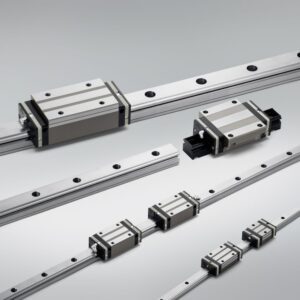
A bearing guide is a mechanical guidance system that uses bearings as rolling elements to support and guide linear or controlled motion along a rail, shaft, or track. Its main purpose is to ensure smooth movement, accurate positioning, and stable load support while minimizing friction and wear.
Unlike simple sliding guides, bearing guides rely on rolling contact, which significantly reduces resistance and improves motion efficiency. They are essential in systems requiring high precision, repeatability, and long service life.
How Does a Bearing Guide Work?
A bearing guide operates by combining two primary elements:
Guide Structure – Rail, shaft, or track that defines the motion path
Bearing Assembly – Rolling elements that support the load and allow movement
When a load moves along the guide:
Bearings roll instead of slide
Friction is minimized
Motion remains smooth and controlled
Load is evenly distributed across the bearing elements
Depending on the design, bearing guides may allow linear motion, curved motion, or multi-axis movement.
Main Components of a Bearing Guide System
1. Guide Rail or Shaft
Provides the motion path
Can be round or profiled
Manufactured from hardened steel or aluminum
2. Bearing Elements
Ball bearings or roller bearings
Reduce friction and carry loads
3. Bearing Block or Carriage
Houses the bearings
Moves along the guide rail
4. Retainers and Cages
Maintain even spacing of bearings
Ensure smooth circulation
5. Seals and Wipers
Protect against dust and contaminants
Extend service life
6. Lubrication System
Grease or oil pathways
Reduces wear and heat generation
Types of Bearing Guides
1. Ball Bearing Guides
Use steel balls as rolling elements
Low friction and high speed
Smooth and quiet operation
Applications: CNC machines, automation equipment, laboratory systems
2. Roller Bearing Guides
Use cylindrical or tapered rollers
Higher load capacity and rigidity than ball types
Better resistance to shock and vibration
Applications: Heavy machinery, gantry systems, industrial handling equipment
3. Linear Bearing Guides
Designed specifically for linear motion
Used with profiled rails or round shafts
High precision and load stability
Applications: Robotics, machine tools, precision positioning systems
4. Cam Roller Bearing Guides
Use cam followers or track rollers
Can follow curved or complex paths
Strong load capacity
Applications: Conveyor systems, automated production lines
5. Miniature Bearing Guides
Compact size with high accuracy
Designed for light loads and limited space
Applications: Medical devices, electronics manufacturing, optical equipment
Materials Used in Bearing Guides
Hardened Carbon Steel – High strength and wear resistance
Stainless Steel – Corrosion resistance for harsh environments
Aluminum Alloy – Lightweight guide structures
Engineering Plastics – Low noise and chemical resistance
Surface Coatings – Improve corrosion resistance and durability
Material selection depends on load requirements, environment, and operating speed.
Advantages of Bearing Guides
Low Friction and Smooth Motion
High Load Capacity
Excellent Positioning Accuracy
Long Service Life
Reduced Energy Consumption
Stable and Repeatable Performance
Compared with sliding guides, bearing guides offer superior efficiency and precision.
Applications of Bearing Guides
Bearing guides are used across a wide range of industries:
CNC Machine Tools – Axis movement and positioning
Industrial Automation – Pick-and-place systems, assembly lines
Robotics – Linear actuators and motion modules
Packaging Machinery – High-speed and repetitive motion
Material Handling Systems – Conveyors, lifting platforms
Medical Equipment – Imaging and diagnostic devices
Bearing Guides vs. Sliding Guides
| Feature | Bearing Guide | Sliding Guide |
|---|---|---|
| Friction | Very Low | Higher |
| Accuracy | High | Medium |
| Speed Capability | High | Limited |
| Load Capacity | High (roller types) | Medium |
| Maintenance | Moderate | Low |
Bearing guides are ideal for precision and speed, while sliding guides suit simpler or low-cost applications.
How to Select the Right Bearing Guide
When choosing a bearing guide, consider:
Load Capacity – Static and dynamic loads
Motion Type – Linear, curved, or multi-axis
Required Accuracy and Rigidity
Speed and Acceleration
Environmental Conditions – Dust, moisture, temperature
Installation Space
Maintenance Requirements
Proper selection ensures optimal performance and durability.
Installation and Maintenance Best Practices
Installation
Ensure precise alignment of rails and bearings
Use recommended mounting torque
Avoid contamination during assembly
Maintenance
Clean guide surfaces regularly
Lubricate according to manufacturer recommendations
Inspect bearings for wear or abnormal noise
Good maintenance significantly extends service life.
Future Trends in Bearing Guide Technology
Self-lubricating bearing guides
Maintenance-free designs
Higher load capacity in compact sizes
Smart bearing guides with condition monitoring
Eco-friendly materials and coatings
These innovations are driving improved efficiency and sustainability in motion systems.
Frequently Asked Questions (FAQs)
1. What is a bearing guide used for?
A bearing guide supports and guides motion while reducing friction and maintaining alignment.
2. What is the difference between a bearing guide and a linear bearing?
A linear bearing is a component, while a bearing guide is a complete guidance system combining bearings and rails.
3. Can bearing guides handle heavy loads?
Yes, roller-type bearing guides are designed for high-load industrial applications.
4. Do bearing guides require lubrication?
Most bearing guides require lubrication, though some modern designs are maintenance-free.
5. Where are bearing guides commonly used?
They are widely used in CNC machines, automation systems, robotics, and material handling equipment.
Conclusion
A bearing guide is a critical component in modern motion systems, providing smooth, accurate, and reliable guidance for moving parts. By combining bearings with precision guide structures, bearing guides deliver superior performance compared with traditional sliding solutions.
Choosing the right bearing guide—and maintaining it properly—ensures high efficiency, long service life, and precise motion control in a wide range of industrial and automation applications.