

Introduction
In industrial automation, CNC machining, robotics, and heavy machinery, reliable linear motion is crucial. For applications involving large loads, high forces, or continuous operation, standard linear slides often fall short. This is where heavy duty linear slides come into play.
Heavy duty linear slides are engineered to handle extreme loads, provide superior rigidity, and deliver precise linear motion under demanding conditions. Selecting the right heavy duty slide can significantly improve machine performance, reliability, and operational safety.
This article provides a complete guide to heavy duty linear slides, including their types, materials, benefits, limitations, applications, and maintenance tips.
What Are Heavy Duty Linear Slides?
A heavy duty linear slide is a linear motion system designed to support high load capacities, both static and dynamic, while maintaining precise and smooth motion.
They are typically used in:
CNC machines for heavy materials
Industrial automation equipment
Robotics and gantry systems
Packaging and assembly lines
Key components include:
Rail or Track: Precision-ground to guide motion
Carriage/Slider: Designed with robust bearings to handle heavy loads
Bearing Elements: Balls, rollers, or specialized bushings to minimize friction
Mounting Hardware: Reinforced for high load stability
These slides are engineered for rigidity, durability, and consistent performance, even under continuous, high-load operations.
Types of Heavy Duty Linear Slides
1. Roller Bearing Linear Slides
Use cylindrical or needle rollers
High rigidity and load capacity
Suitable for extremely heavy materials
Applications: Large CNC routers, milling machines, industrial automation
2. Ball Bearing Linear Slides
Use recirculating balls inside the carriage
Smooth motion and moderate-to-high load capacity
Cheaper than roller-type for medium-heavy applications
Applications: CNC gantry systems, heavy-duty packaging lines, material handling
3. Profiled Linear Slides
Square or rectangular rails with robust carriages
Multi-directional load support
Excellent rigidity and stability
Applications: Industrial CNC machines, robot arms, large gantries
4. Telescopic Heavy Duty Slides
Extendable slides designed for long travel
Typically used in tool drawers, heavy-duty industrial trays, and machine access platforms
High load support and smooth operation over extended lengths
Applications: Industrial tool storage, machinery access systems
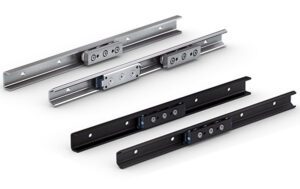
Materials Used in Heavy Duty Linear Slides
Hardened Steel: Provides strength, rigidity, and wear resistance
Stainless Steel: Corrosion-resistant for harsh environments
Aluminum Alloy (for lighter slides): Lightweight yet durable
Polymer or Composite Bearings: Reduce friction and maintenance in certain applications
The choice of materials impacts load capacity, durability, precision, and environmental resistance.
Advantages of Heavy Duty Linear Slides
High Load Capacity: Handles heavy components and materials
Superior Rigidity: Reduces deflection for accurate positioning
Smooth Motion: Low-friction bearings ensure consistent travel
Longevity: Designed for continuous operation in industrial settings
Versatile Applications: Suitable for high-speed, high-load, or multi-axis systems
Heavy duty slides are critical in environments where precision, load-bearing, and reliability are non-negotiable.
Limitations of Heavy Duty Linear Slides
Higher Cost: Premium materials and precision manufacturing increase price
Increased Weight: Robust construction adds mass to the system
Space Requirements: Larger profiles may require more installation space
Maintenance Needs: Bearings may need regular lubrication and inspection
While they are overkill for small or light-duty systems, for heavy industrial applications, they are indispensable.
Applications of Heavy Duty Linear Slides
Heavy duty linear slides are widely used in:
CNC Routers and Milling Machines: For cutting metal, composites, and large wood panels
Industrial Automation: Pick-and-place systems, conveyors, and assembly lines
Robotics: Gantry robots, welding robots, and material handling arms
Packaging Equipment: High-speed, high-load packaging lines
Medical Equipment: Large imaging devices, lab automation
Heavy Machinery: Presses, industrial storage systems, and tool drawers
They provide reliable linear motion where failure or deflection is not an option.
Heavy Duty vs Standard Linear Slides
| Feature | Heavy Duty Linear Slides | Standard Linear Slides |
|---|---|---|
| Load Capacity | High | Low–Medium |
| Rigidity | Superior | Moderate |
| Precision | High | Medium |
| Lifespan | Long | Shorter under heavy use |
| Applications | Industrial, CNC, heavy machinery | Light-duty automation, hobby CNC |
| Cost | Higher | Lower |
Heavy duty slides are chosen for industrial or high-load applications, while standard slides are suitable for budget or light-duty systems.
How to Choose Heavy Duty Linear Slides
Determine Maximum Load: Both static and dynamic loads must be considered
Assess Travel Length: Longer travel may require reinforced or telescopic slides
Evaluate Environmental Conditions: Dust, moisture, or chemicals may require stainless steel or sealed bearings
Consider Precision Needs: High-precision applications may require profiled rails with recirculating bearings
Check Maintenance Requirements: Ensure proper lubrication and access for inspection
Budget and Cost-Benefit Analysis: Heavy duty slides are an investment; choose based on application demands
Maintenance Tips for Heavy Duty Linear Slides
Clean regularly to remove dust, metal shavings, or debris
Lubricate bearings and rails as recommended by the manufacturer
Inspect for wear or misalignment frequently
Avoid overloading to extend service life
Replace worn components promptly to maintain smooth motion
Proper maintenance ensures long-lasting and reliable performance, even under extreme conditions.
Frequently Asked Questions (FAQs)
1. What is considered a heavy duty linear slide?
A slide that supports high static and dynamic loads, offers rigidity under stress, and is suitable for continuous or industrial use.
2. Can heavy duty linear slides be used for CNC machines?
Yes, especially for large-frame CNC routers, milling machines, and gantry systems handling heavy materials.
3. How long do heavy duty linear slides last?
With proper maintenance, they can last 10+ years in industrial settings.
4. Do heavy duty slides need lubrication?
Yes, regular lubrication is required to maintain smooth motion and prevent wear.
5. Are heavy duty linear slides more precise than standard slides?
Yes, they are designed to minimize deflection under high loads, providing higher precision in demanding applications.
Conclusion
Heavy duty linear slides are essential components in industrial automation, CNC machinery, and robotics, offering high load capacity, precision, and durability. While they come at a higher cost, their ability to handle extreme loads and maintain accurate linear motion makes them indispensable in demanding environments.
Selecting the right heavy duty slide involves considering load, travel, precision, material, and maintenance requirements. Proper care and installation ensure reliable performance, extended lifespan, and consistent operation in the most challenging applications.