

Outline
| Heading | Subtopics Covered |
|---|---|
| Introduction to Linear Ball Bearings | Definition, significance, and evolution |
| Understanding Linear Ball Bearings | Basic design, core components, and mechanical principles |
| The Science Behind Linear Ball Bearings | Tribology, load transfer, and friction control |
| Different Types of Linear Ball Bearings | Open, closed, adjustable, and self-aligning bearings |
| Key Components of Linear Ball Bearings | Outer cylinder, ball retainer, ball cage, and seals |
| Material Composition in Linear Ball Bearings | Stainless steel, chrome steel, polymer cages |
| How Linear Ball Bearings Work | Rolling mechanics and linear motion dynamics |
| Advantages of Linear Ball Bearings | Precision, speed, durability, and maintenance efficiency |
| Common Problems in Linear Ball Bearings | Contamination, misalignment, lubrication failure |
| Applications of Linear Ball Bearings | Robotics, CNC machines, 3D printers, medical tools |
| Installation and Alignment of Linear Ball Bearings | Step-by-step setup and tips for precision fitting |
| Lubrication and Maintenance Best Practices | Grease types, cleaning, and inspection intervals |
| Innovations in Linear Ball Bearings | Smart bearings, nano-coatings, and low-friction materials |
| Comparison Between Linear Ball Bearings and Linear Bushings | Key performance differences and use cases |
| Performance Optimization for Linear Ball Bearings | Noise reduction, preload settings, and damping |
| Environmental and Sustainability Aspects | Recyclable materials, eco-lubricants, and clean design |
| Testing and Quality Standards in Linear Ball Bearing Manufacturing | ISO compliance, precision testing, fatigue testing |
| Cost and Lifespan Considerations | Factors affecting price, maintenance costs, and longevity |
| Future Trends in Linear Ball Bearing Technology | Smart integration, IoT monitoring, predictive maintenance |
| Case Study: Linear Ball Bearings in CNC Applications | Real-world performance analysis |
| Linear Ball Bearings in Robotics and Automation | Use in robotic arms and pick-and-place systems |
| How Linear Ball Bearings Improve Industrial Efficiency | Productivity and energy savings |
| FAQs About Linear Ball Bearings | Common user questions and answers |
| Conclusion: The Evolution of Linear Ball Bearings | The next generation of precision motion systems |
Introduction to Linear Ball Bearings
A linear ball bearing is one of the most ingenious mechanical inventions in motion engineering. It enables precise linear movement with minimal friction by using small hardened steel balls rolling within a cylindrical housing. These bearings are the silent workhorses behind countless machines — from 3D printers to industrial automation lines — where precision, smoothness, and durability are paramount.
Unlike conventional rotary bearings, linear ball bearings allow a shaft to move back and forth in a straight path. This motion is stable, repeatable, and efficient. As industries continue to demand faster production and tighter tolerances, the linear ball bearing has become indispensable in delivering ultra-precise linear motion.
Understanding Linear Ball Bearings
At its core, a linear ball bearing consists of a cylindrical housing that contains recirculating rows of steel balls. These balls roll along hardened shafts or rails, allowing for free and frictionless movement.
The mechanism transforms mechanical energy into linear displacement with minimal resistance. Most linear ball bearings are mounted on precision shafts or integrated into linear motion systems, where they support both radial and axial loads. Their self-lubricating designs and compact structure make them ideal for applications that require consistent, maintenance-free operation.
The Science Behind Linear Ball Bearings
The efficiency of linear ball bearings relies on the principles of tribology — the study of friction, wear, and lubrication. The rolling elements (balls) reduce surface contact area between the moving parts, dramatically lowering friction.
When the shaft moves, the balls rotate between the inner and outer surfaces, distributing the load evenly. The smoother the surface finish, the lower the friction coefficient, which can drop below 0.003 in advanced bearings.
In high-precision environments like aerospace or robotics, engineers also account for micro-elastic deformations, preload forces, and heat dissipation to maintain motion stability.
Different Types of Linear Ball Bearings
Linear ball bearings come in several configurations to match specific mechanical and environmental needs:
Closed Linear Bearings: Fully enclosed units ideal for continuous shafts.
Open Linear Bearings: Feature cutouts for shaft supports, allowing direct mounting on supported rails.
Adjustable Bearings: Provide preload adjustment for eliminating clearance.
Self-Aligning Bearings: Accommodate minor misalignments between the shaft and housing.
Flanged Bearings: Simplify mounting with an integrated flange design.
Choosing the right type ensures reliable motion, proper load distribution, and minimal wear.
Key Components of Linear Ball Bearings
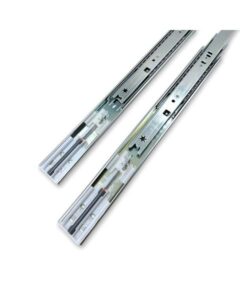
A linear ball bearing is composed of precision-engineered components designed for harmony:
Outer Cylinder: Provides structure and rigidity.
Ball Retainer (Cage): Holds and guides the rolling elements.
Ball Rows: Typically made from hardened steel or ceramic, they carry the load.
End Seals: Prevent dust or debris from entering.
Lubrication Channel: Ensures consistent oil or grease distribution.
Every part plays a vital role in ensuring smooth motion and long-term durability.
Material Composition in Linear Ball Bearings
Material selection directly impacts performance and longevity. Common materials include:
Stainless Steel: Offers corrosion resistance and strength for clean environments.
Chrome Steel (GCr15): The most common choice for its balance of hardness and cost-efficiency.
Ceramic Balls: Provide high-speed operation and low thermal expansion.
Polymer Retainers: Reduce noise and prevent ball skidding.
In harsh environments, hybrid designs combining steel races and ceramic balls are often used to enhance wear resistance and reduce friction further.
How Linear Ball Bearings Work
When a linear ball bearing moves along a shaft, the internal balls roll between the inner bore and the outer raceway. As the load transfers to the balls, they recirculate through return paths within the housing, ensuring continuous, frictionless motion.
This recirculation system ensures that wear is evenly distributed, maintaining high accuracy over millions of cycles. Proper lubrication ensures a thin film separates the balls from the races, preventing direct metal contact and minimizing heat buildup.
Advantages of Linear Ball Bearings
Linear ball bearings are popular because they deliver superior performance in compact designs.
Key advantages include:
High Precision and Repeatability: Perfect for CNC and automation applications.
Low Friction and Smooth Motion: Rolling elements reduce resistance significantly.
Compact Design: Lightweight and easy to integrate into systems.
Durability: With proper lubrication, they can run millions of cycles without wear.
Cost-Effective: Long service life reduces maintenance and replacement costs.
These attributes make them the go-to solution for industries seeking precise, reliable linear motion.
Common Problems in Linear Ball Bearings
While efficient, linear ball bearings are not immune to wear or operational issues.
Typical problems include:
Contamination: Dust and dirt cause pitting and corrosion.
Misalignment: Leads to uneven wear and reduced lifespan.
Lubrication Failure: Causes friction, overheating, and noise.
Overloading: Deforms the raceway or balls, leading to rough movement.
Corrosion: Moisture or chemical exposure weakens material integrity.
Preventive measures like proper sealing, regular cleaning, and correct installation prevent most of these issues.

Applications of Linear Ball Bearings
Linear ball bearings are used wherever precision linear motion is essential. Common applications include:
CNC Machines: For tool head or table movement.
3D Printers: Smooth head and bed motion.
Robotics: Positioning arms with accuracy and repeatability.
Medical Devices: In imaging, scanning, and automation systems.
Automation Lines: Facilitating controlled part movement.
They are also widely used in packaging, aerospace, and semiconductor manufacturing due to their reliability and low maintenance requirements.
Installation and Alignment of Linear Ball Bearings
Proper installation is key to ensuring the long life of a linear ball bearing system.
Installation tips:
Clean shafts and housings before mounting.
Use precision measuring tools for alignment.
Avoid hammering or forced fitting to prevent deformation.
Secure bearings with recommended torque levels.
Test for smooth motion before applying load.
Even small misalignments can dramatically reduce bearing lifespan, so precision during installation is critical.
Lubrication and Maintenance Best Practices
Lubrication ensures optimal performance by reducing friction and wear.
Maintenance essentials:
Use lithium-based grease or synthetic oil depending on the environment.
Re-lubricate every six to twelve months under standard operation.
For cleanrooms or medical environments, use dry-film lubricants to prevent contamination.
Inspect periodically for unusual noise, vibration, or play.
A simple maintenance schedule often triples the service life of linear ball bearings.
Innovations in Linear Ball Bearings
Technological advancements continue to enhance the performance of linear ball bearings:
Smart Bearings: Embedded sensors track temperature, load, and vibration.
Self-Lubricating Designs: Eliminate the need for manual grease application.
Nano-Coatings: Improve wear resistance and corrosion protection.
Low-Friction Polymer Cages: Reduce heat and noise generation.
These innovations push the boundaries of what linear bearings can achieve, leading to longer life and lower maintenance costs.
Comparison Between Linear Ball Bearings and Linear Bushings
| Feature | Linear Ball Bearings | Linear Bushings |
|---|---|---|
| Friction | Very low (rolling contact) | Moderate (sliding contact) |
| Speed | High | Medium |
| Load Capacity | Moderate to high | High |
| Noise Level | Low | Medium |
| Maintenance | Low | Medium |
| Cost | Moderate | Low |
While bushings are more rugged, linear ball bearings offer unmatched smoothness and precision.
Performance Optimization for Linear Ball Bearings
Engineers fine-tune linear ball bearings for specific performance needs by:
Adjusting preload to remove backlash.
Using damping materials for vibration control.
Employing ceramic balls for high-speed operations.
Integrating shock-absorbing mounts for stability.
These optimizations help achieve quieter, more accurate, and more durable systems.
Environmental and Sustainability Aspects
Sustainability has become an integral part of modern bearing design.
Manufacturers now focus on:
Recyclable Steel Alloys to reduce waste.
Eco-Friendly Lubricants that degrade naturally.
Energy-Efficient Manufacturing to minimize carbon footprints.
Extended Lifespan Designs to lower resource consumption.
Eco-conscious bearings are paving the way toward greener manufacturing environments.
Testing and Quality Standards in Linear Ball Bearing Manufacturing
All linear ball bearings undergo strict quality control before reaching the market:
Dimensional Accuracy Tests using coordinate measuring machines (CMMs).
Fatigue and Load Tests to assess durability.
Surface Hardness Checks for wear resistance.
ISO 9001 and ISO 281 Compliance to guarantee global performance standards.
These ensure every bearing delivers consistent performance under real-world conditions.
Cost and Lifespan Considerations
Linear ball bearings offer an excellent balance between cost and durability. While initial prices vary by size and precision grade, their long lifespan and low maintenance costs make them highly cost-effective.
With proper care, many bearings exceed 10,000 kilometers of travel without failure — a testament to their engineering excellence.
Future Trends in Linear Ball Bearing Technology
The next generation of linear ball bearings will integrate digital intelligence and self-maintenance.
Emerging trends include:
AI-based failure prediction.
IoT connectivity for real-time monitoring.
Self-healing coatings for extended durability.
Ultra-light composite housings for faster motion systems.
These innovations will redefine efficiency, making machines smarter, faster, and greener.
Case Study: Linear Ball Bearings in CNC Applications
In CNC milling machines, linear ball bearings ensure precise, repeatable tool movements. A study comparing linear bearings with plain bushings showed a 35% improvement in precision and 25% faster feed rates due to reduced friction.
Manufacturers also reported a 40% decrease in maintenance downtime, proving that linear ball bearings deliver both performance and cost efficiency.
Linear Ball Bearings in Robotics and Automation
Robotics heavily relies on linear ball bearings for their ability to provide quiet, accurate, and stable movement. In pick-and-place robots, they ensure precision positioning even at high speeds.
Their light weight, low friction, and compact size make them ideal for robotic joints, gantry systems, and linear actuators — enabling the seamless automation we see today.
How Linear Ball Bearings Improve Industrial Efficiency
By reducing energy loss due to friction, linear ball bearings improve machine efficiency and output quality. They minimize vibration, leading to smoother finishes and reduced wear on other machine parts.
In manufacturing and assembly lines, these systems ensure higher uptime, greater accuracy, and consistent product quality.
FAQs About Linear Ball Bearings
What is a linear ball bearing used for?
It allows smooth, precise linear motion along a shaft with minimal friction.
How long do linear ball bearings last?
With proper maintenance, they can last for millions of cycles or over 10,000 km of operation.
Do linear ball bearings need lubrication?
Yes, lubrication prevents friction, overheating, and premature wear.
Can they handle vertical loads?
Yes, but always check load ratings for your specific application.
Are ceramic ball bearings better than steel?
Ceramic balls are lighter, faster, and more wear-resistant but more expensive.
What are the signs of bearing failure?
Noise, vibration, or rough movement typically indicate wear or contamination.
Conclusion: The Evolution of Linear Ball Bearings
The linear ball bearing stands as a symbol of precision engineering — a small component that makes a massive impact. From factory automation to medical robotics, it drives the world’s most advanced machinery with speed and accuracy.
As innovations continue in materials, coatings, and smart monitoring, linear ball bearings are poised to become even more efficient, sustainable, and intelligent — powering the future of motion control.
Suggested Internal Links
[Advantages of Linear Motion Systems]
[Lubrication Techniques for Bearings]
[How to Select the Right Linear Bearings]