

Outline
| Heading | Subtopics Covered |
|---|---|
| Introduction to Linear Slide Rail System | Definition, core concept, and significance |
| What is a Linear Slide Rail System? | Basic structure, functionality, and working principles |
| Historical Evolution of Linear Slide Rail Systems | Early motion systems and modern technological improvements |
| Key Components of a Linear Slide Rail System | Rails, carriages, ball bearings, seals, and fasteners |
| Types of Linear Slide Rail Systems | Ball-type, roller-type, miniature, and heavy-duty systems |
| Material Composition of Linear Slide Rails | Stainless steel, carbon steel, and aluminum alloys |
| How a Linear Slide Rail System Works | Mechanics of rolling motion and load distribution |
| Advantages of Linear Slide Rail Systems | High precision, smooth motion, reduced friction |
| Disadvantages and Limitations | Cost, installation precision, and contamination issues |
| Linear Slide Rail System Design Considerations | Load rating, stroke length, environment, and accuracy needs |
| Applications of Linear Slide Rail Systems | CNC machinery, robotics, automation, and medical devices |
| Installation Guidelines for Linear Slide Rail Systems | Step-by-step installation and alignment tips |
| Maintenance and Lubrication Practices | Lubrication types, schedules, and cleaning procedures |
| Troubleshooting Common Linear Slide Rail Problems | Noise, uneven motion, misalignment, and wear issues |
| Linear Slide Rail System vs Linear Shaft Bearings | Differences in structure, performance, and applications |
| Performance Optimization Techniques | Vibration reduction, preload adjustment, and damping systems |
| Innovations in Linear Slide Rail Systems | Smart monitoring, self-lubricating rails, and hybrid materials |
| Quality Standards and Testing Procedures | ISO compliance, precision grading, and endurance testing |
| Environmental Sustainability in Linear Slide Systems | Eco-friendly lubrication and recyclable components |
| Cost and Lifespan Analysis of Linear Slide Rail Systems | Price factors, lifespan estimation, and ROI evaluation |
| Case Study: Linear Slide Rail Systems in 3D Printing | Enhanced precision and stability in additive manufacturing |
| The Role of Linear Slide Rail Systems in Automation | Robotics, assembly lines, and conveyor integration |
| Future of Linear Slide Rail System Technology | AI integration, digital monitoring, and smart factories |
| FAQs About Linear Slide Rail Systems | Common questions and expert answers |
| Conclusion: The Future of Precision with Linear Slide Rail Systems | Final insights and technological outlook |
Introduction to Linear Slide Rail System
A linear slide rail system is one of the most essential components in precision motion engineering. From advanced CNC machines to delicate medical robots, these systems ensure that parts move smoothly, precisely, and consistently along a linear path. By minimizing friction and maximizing accuracy, a linear slide rail system provides the backbone for countless automation and industrial applications.
Whether you’re building a high-speed production line or a laboratory instrument requiring micron-level precision, the performance of your linear slide rail system determines the overall accuracy, efficiency, and reliability of your equipment.
What is a Linear Slide Rail System?
A linear slide rail system consists of a rail (or guide) and a moving block (also called a carriage or slider). Inside this carriage are ball bearings or rollers that allow frictionless, controlled movement along the rail. The system converts rotary motion into smooth, linear motion, supporting heavy loads while maintaining exceptional accuracy.
Unlike traditional sliding mechanisms that rely on direct contact between surfaces, the linear slide rail system uses rolling elements to drastically reduce wear and friction. This technology makes it ideal for machines that demand both precision and longevity.
Historical Evolution of Linear Slide Rail Systems
Linear motion systems have evolved from simple dovetail slides to modern precision-engineered linear rail guides.
Early Designs (Pre-1900s): Used plain bronze or wooden slides lubricated by oil.
Mid-20th Century: The introduction of rolling-element bearings transformed motion control.
Modern Era: High-precision ground rails and recirculating ball designs revolutionized automation and CNC machining.
Today, linear slide rail systems integrate smart technologies such as sensors for predictive maintenance and digital monitoring — signaling a leap toward intelligent motion systems.
Key Components of a Linear Slide Rail System
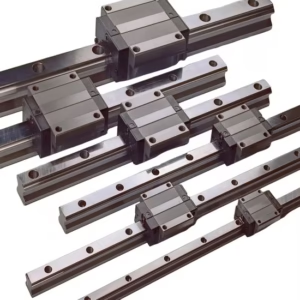
Every linear slide rail system consists of precision-engineered parts that work in perfect harmony:
Guide Rail: Provides the path for linear movement; usually hardened and ground for durability.
Carriage (Block): The moving component that slides along the rail, supported by bearings or rollers.
Rolling Elements: Typically steel balls or rollers that minimize friction.
Seals: Protect against dust, moisture, and contamination.
Fasteners and End Caps: Secure the components and prevent debris from entering the motion path.
Each part contributes to the overall stability, smoothness, and accuracy of the motion system.
Types of Linear Slide Rail Systems
Several variations exist depending on the motion and load requirements:
Ball-Type Rails: Feature recirculating steel balls for ultra-low friction and smooth motion.
Roller-Type Rails: Use cylindrical rollers for higher load capacity and rigidity.
Miniature Rails: Compact systems for small electronics or precision instruments.
Heavy-Duty Rails: Designed for industrial automation and machine tools.
The correct selection depends on the application’s environment, accuracy needs, and weight requirements.
Material Composition of Linear Slide Rails
Material quality determines how well a linear slide rail system performs under stress.
Common materials include:
High-Carbon Steel: Offers excellent hardness and fatigue resistance.
Stainless Steel: Corrosion-resistant and suitable for cleanroom or medical applications.
Aluminum Alloy: Lightweight and ideal for compact, portable devices.
Polymer Coatings: Provide low-friction surfaces and self-lubrication.
The choice of material balances factors like cost, environment, and load-bearing needs.
How a Linear Slide Rail System Works
The working principle is elegantly simple yet technically sophisticated. As the carriage moves along the rail, the rolling elements (balls or rollers) circulate within a track inside the carriage.
This recirculating motion distributes load evenly across multiple contact points, drastically reducing friction. The result is smooth, stable, and repeatable movement. Proper lubrication ensures minimal wear, consistent motion, and a long operational life.
Advantages of Linear Slide Rail Systems
Linear slide rail systems offer a host of benefits that make them superior to traditional sliding mechanisms:
Exceptional Precision: Provides accurate linear motion even at high speeds.
Reduced Friction: Rolling elements minimize resistance and wear.
High Load Capacity: Can handle both radial and axial forces.
Durability: Hardened materials ensure long-lasting performance.
Compact Design: Ideal for space-constrained applications.
Low Maintenance: Self-lubricating options reduce servicing needs.
These systems are essential for achieving repeatable and reliable motion in industrial applications.
Disadvantages and Limitations
Despite their numerous advantages, linear slide rail systems have a few constraints:
High Initial Cost: Precision components can be expensive.
Installation Sensitivity: Requires accurate alignment during setup.
Contamination Vulnerability: Dust or debris can affect performance.
Noise at High Speed: Can occur without proper lubrication.
However, modern innovations such as sealed bearings and automated lubrication systems have mitigated most of these drawbacks.
Linear Slide Rail System Design Considerations
When designing or selecting a linear rail system, engineers consider several key parameters:
Load Capacity: Ensures the rail can handle operational stress.
Stroke Length: Determines the range of motion.
Accuracy Grade: Precision rating impacts repeatability.
Environmental Factors: Temperature, humidity, and exposure to contaminants.
Speed and Acceleration: Affects bearing selection and lubrication.
An optimized design ensures both longevity and consistent performance.
Applications of Linear Slide Rail Systems
Linear slide rail systems power a wide range of applications across industries:
CNC Machines: Precision cutting and milling operations.
3D Printers: Smooth motion for printing heads and platforms.
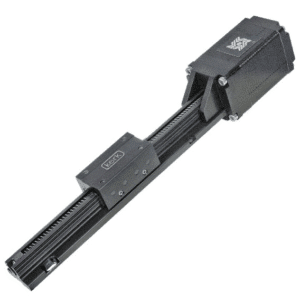
Robotics: Movement in robotic arms and linear actuators.
Medical Devices: In surgical tools, imaging systems, and diagnostics.
Packaging and Assembly Lines: Fast, accurate part transfers.
These systems have become indispensable in the age of automation and robotics.
Installation Guidelines for Linear Slide Rail Systems
Correct installation is crucial for optimal performance:
Prepare Clean Surfaces: Remove dust or oil residues.
Align Rails Accurately: Use precision tools to ensure straightness.
Secure Rails Gradually: Tighten bolts evenly to avoid distortion.
Mount the Carriage Gently: Avoid forcing or misalignment.
Lubricate Properly: Apply manufacturer-recommended grease or oil.
Proper installation extends service life and maintains precision motion.
Maintenance and Lubrication Practices
Routine care ensures your linear slide rail system runs smoothly for years.
Lubrication: Use high-quality grease or oil to minimize wear.
Cleaning: Remove dust and debris regularly.
Inspection: Check for play, noise, or rough motion.
Re-Lubrication Intervals: Adjust based on load and environment.
Automated lubrication systems can drastically reduce manual maintenance needs in high-duty environments.
Troubleshooting Common Linear Slide Rail Problems
Common issues and their causes include:
| Problem | Possible Cause | Solution |
|---|---|---|
| Noise or vibration | Dry or dirty rails | Clean and re-lubricate |
| Uneven movement | Misalignment | Realign rails and blocks |
| Excessive wear | Overloading | Verify load limits |
| Binding or jamming | Contamination | Inspect and replace seals |
Routine checks prevent costly downtime and maintain performance integrity.
Linear Slide Rail System vs Linear Shaft Bearings
| Feature | Linear Slide Rail System | Linear Shaft Bearing |
|---|---|---|
| Friction Level | Very Low | Moderate |
| Precision | High | Medium |
| Load Capacity | High | Low to Medium |
| Rigidity | Superior | Limited |
| Maintenance | Low | Moderate |
Linear slide rails are preferred for high-precision machinery, while shaft bearings suit lighter-duty, low-cost setups.
Performance Optimization Techniques
To maximize performance, engineers can:
Adjust preload to eliminate clearance.
Use damping systems for vibration control.
Optimize lubrication for specific speeds.
Employ precision-ground surfaces for smoother operation.
Proper tuning enhances both precision and operational life.
Innovations in Linear Slide Rail Systems
The latest advancements include:
Self-Lubricating Carriages: Reduce maintenance frequency.
Smart Sensors: Monitor load, temperature, and wear.
Hybrid Materials: Combine steel rails with ceramic rolling elements.
Anti-Corrosion Coatings: Extend lifespan in harsh environments.
These innovations bring higher reliability and lower downtime in modern manufacturing.
Quality Standards and Testing Procedures
Reputable manufacturers follow stringent quality control processes:
ISO 9001 Certification ensures consistency and safety.
Dimensional Accuracy Tests verify straightness and flatness.
Load and Fatigue Testing simulate long-term operation.
Surface Hardness Checks confirm wear resistance.
Quality testing ensures every rail system meets industrial-grade performance requirements.
Environmental Sustainability in Linear Slide Systems
Sustainability is becoming a top design priority:
Use of recyclable materials in rails and blocks.
Eco-friendly lubricants that minimize environmental impact.
Energy-efficient production methods that lower carbon footprint.
Longer life cycles that reduce waste generation.
Green engineering is the new direction for motion control technology.
Cost and Lifespan Analysis of Linear Slide Rail Systems
While the upfront cost may seem high, a linear slide rail system offers a better total cost of ownership. With minimal maintenance and long operating life, they deliver excellent ROI.
High-quality systems often last tens of thousands of hours with proper lubrication and environmental control.
Case Study: Linear Slide Rail Systems in 3D Printing
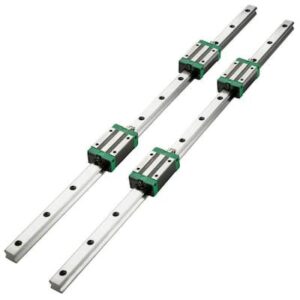
In modern 3D printers, linear slide rails enable stable and repeatable motion for the print head and bed. Their high precision ensures consistent layer alignment, improving product quality.
Manufacturers have reported up to 40% faster print speeds and 30% better dimensional accuracy when upgrading from plain bushings to linear slide rail systems.
The Role of Linear Slide Rail Systems in Automation
Automation systems depend on linear motion accuracy. From robotic pick-and-place arms to packaging conveyors, linear slide rail systems ensure reliable and controlled movement.
Their ability to maintain accuracy under dynamic conditions makes them essential for Industry 4.0-level automation.
Future of Linear Slide Rail System Technology
The future is smart and connected.
Next-generation linear slide rail systems will feature:
Real-time monitoring via IoT sensors.
AI-based predictive maintenance.
Ultra-low friction coatings for energy savings.
Digital twin simulations for system optimization.
These technologies will redefine precision motion across all industries.
FAQs About Linear Slide Rail Systems
What is the purpose of a linear slide rail system?
It ensures smooth, precise linear motion with minimal friction and high load capacity.
How long do linear slide rails last?
With proper maintenance, they can exceed 50,000 hours of operation.
Can they be used vertically?
Yes, but ensure proper preload and lubrication.
Do they need regular lubrication?
Yes, periodic lubrication prevents wear and corrosion.
What’s the difference between ball and roller linear rails?
Ball types provide smoother motion, while roller types handle higher loads.
Are linear slide rails suitable for high-speed applications?
Absolutely. Many models are rated for high acceleration and velocity motion control.
Conclusion: The Future of Precision with Linear Slide Rail Systems
The linear slide rail system is more than just a motion component — it’s a precision-engineering marvel that powers the future of automation, robotics, and advanced manufacturing. With innovations in materials, lubrication, and smart technology, these systems continue to set the benchmark for efficiency, reliability, and precision.
As industries evolve toward smart factories and AI-driven systems, the humble linear slide rail system remains the cornerstone of accurate, controlled linear motion.
Suggested Internal Links
[Benefits of Linear Motion Systems]
[Choosing Between Ball and Roller Rails]
[Guide to Lubricating Precision Bearings]