

Introduction to Linear Rail Bearing
What is a Linear Rail Bearing?
A linear rail bearing is a precision mechanical system designed to provide smooth, controlled, and accurate linear motion along a fixed rail. It typically consists of a hardened rail and a moving carriage (also known as a slider block) that contains rolling elements such as balls or rollers.
Unlike basic sliding mechanisms, a linear rail bearing uses rolling contact to minimize friction and improve efficiency. This makes it ideal for applications that require high precision, repeatability, and durability.
Importance in Modern Motion Systems
In today’s advanced engineering landscape, linear rail bearing systems are essential for achieving:
- High-precision positioning
- Smooth and stable motion
- Long-lasting performance under heavy loads
From industrial automation to medical devices, these systems are at the heart of modern motion control technologies.
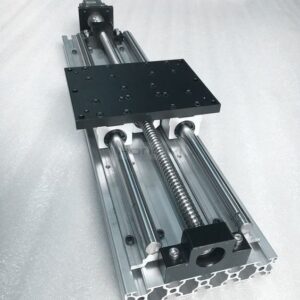
Working Principle of Linear Rail Bearing
Rolling Element Mechanism
The core principle of a linear rail bearing is based on rolling elements. These elements—either balls or rollers—move between the rail and the carriage, allowing smooth linear motion.
Recirculation of Balls or Rollers
In most designs, the rolling elements follow a recirculating path. As the carriage moves along the rail:
- Balls roll in the load zone
- They exit the load zone
- Return through internal channels
This continuous loop ensures uninterrupted motion.
Friction Reduction and Efficiency
By converting sliding friction into rolling friction, linear rail bearing systems significantly reduce resistance. This leads to:
- Lower energy consumption
- Reduced heat generation
- Increased operational efficiency
Types of Linear Rail Bearing
Ball Type Linear Rail Bearing
Ball-type systems use spherical balls and are ideal for high-speed, moderate-load applications.
Roller Type Linear Rail Bearing
Roller-type systems use cylindrical rollers, providing higher load capacity and rigidity.
Miniature Linear Rail Bearing
Miniature versions are designed for compact applications such as electronics and precision instruments.
Comparative Analysis
| Type | Load Capacity | Speed | Rigidity |
|---|---|---|---|
| Ball Type | Medium | High | Moderate |
| Roller Type | High | Moderate | High |
| Miniature | Low | High | Moderate |
Key Components of Linear Rail Bearing
Linear Rail
The rail provides the guiding path and is typically made from hardened steel for durability.
Carriage (Slider Block)
The carriage moves along the rail and carries the load.
Rolling Elements
Balls or rollers inside the carriage enable smooth motion.
End Caps, Seals, and Lubrication
These components protect the system from contamination and ensure proper lubrication.
Advantages of Linear Rail Bearing
High Precision Motion
Linear rail bearing systems offer exceptional accuracy and repeatability, making them ideal for precision applications.
High Load Capacity
They can handle heavy loads while maintaining stability and performance.
Long Service Life
With proper maintenance, these systems can operate efficiently for extended periods.
Applications of Linear Rail Bearing
CNC Machines
Used for precise tool positioning and movement.
Automation and Robotics
Essential for robotic arms and automated assembly lines.
Semiconductor Manufacturing
Provide ultra-precise motion required for chip production.
Medical and Laboratory Equipment
Used in imaging systems and precision instruments.
Materials Used in Linear Rail Bearing
Hardened Steel
Offers strength and wear resistance.
Stainless Steel
Provides corrosion resistance in harsh environments.
Polymer and Composite Materials
Used for lightweight and specialized applications.
Installation Guidelines
Rail Alignment Techniques
Proper alignment ensures smooth operation and prevents uneven wear.
Mounting and Fastening
Secure mounting is essential for stability and accuracy.
Common Installation Errors
- Misalignment
- Improper tightening
- Lack of lubrication
Maintenance and Troubleshooting
Lubrication Practices
Regular lubrication reduces friction and extends lifespan.
Wear and Damage Detection
Signs include noise, vibration, and decreased smoothness.
Extending Lifespan
Routine maintenance and proper handling are key.
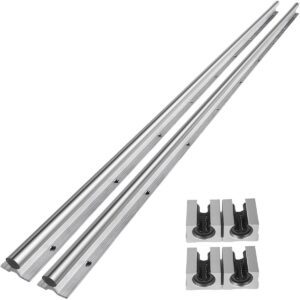
Linear Rail Bearing vs Other Motion Systems
Linear Rail Bearing vs Linear Ball Bearing
Linear rail bearing systems offer higher rigidity and load capacity compared to standard linear ball bearings.
Linear Rail Bearing vs Sliding Systems
Sliding systems have higher friction, while linear rail bearing systems provide smoother and more efficient motion.
Performance Comparison
Linear rail bearing systems excel in precision, durability, and efficiency.
Factors to Consider When Choosing Linear Rail Bearing
Load and Speed Requirements
Select a system that meets operational demands.
Accuracy and Rigidity
High-precision applications require rigid systems.
Environmental Conditions
Consider factors like temperature, dust, and moisture.
Future Trends in Linear Rail Bearing Technology
Smart Bearings with Sensors
Future systems will include sensors for real-time monitoring.
Advanced Materials and Coatings
New materials will improve durability and reduce friction.
Integration with Industry 4.0
Linear rail bearing systems will integrate with smart manufacturing technologies.
Frequently Asked Questions (FAQs)
1. What is a linear rail bearing used for?
It is used to provide precise and smooth linear motion in mechanical systems.
2. How does a linear rail bearing work?
It uses rolling elements like balls or rollers to reduce friction and guide movement.
3. What are the types of linear rail bearing?
Ball type, roller type, and miniature versions are the main types.
4. Where are linear rail bearings used?
They are used in CNC machines, robotics, semiconductor equipment, and medical devices.
5. What materials are used in linear rail bearings?
Common materials include hardened steel, stainless steel, and polymers.
6. How do you maintain linear rail bearings?
Regular lubrication, cleaning, and inspection are essential.
Conclusion
Linear rail bearing systems are essential components in modern engineering, offering unmatched precision, load capacity, and efficiency. Their ability to provide smooth and reliable motion makes them indispensable across a wide range of industries.
As technology advances, these systems will continue to evolve with smarter features, better materials, and deeper integration into automated environments. Choosing the right linear rail bearing and maintaining it properly ensures long-term performance and reliability.