

If you’re working in automation, manufacturing, or mechanical design, you’ve likely come across the term linear bearing slide. This essential component plays a key role in enabling smooth, precise, and low-friction linear motion across a wide range of industries.
In this comprehensive guide, we’ll explore everything you need to know about linear bearing slide systems—from how they work to their applications, benefits, and how to choose the right one for your project.
What Is a Linear Bearing Slide?
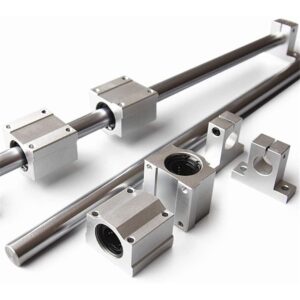
A linear bearing slide is a mechanical assembly designed to provide smooth linear motion along a single axis. It typically consists of a rail (or shaft) and a bearing block that moves along it with minimal friction.
Unlike traditional sliding mechanisms, linear bearing slides use rolling elements such as balls or rollers to reduce resistance and wear, ensuring higher precision and longer lifespan.
How Does a Linear Bearing Slide Work?
At its core, a linear bearing slide operates using rolling motion instead of sliding friction.
Key Components
- Rail or Shaft – Provides the path for movement
- Bearing Block (Carriage) – Moves along the rail
- Rolling Elements – Balls or rollers that minimize friction
- Seals & Lubrication System – Protect and maintain smooth operation
As the carriage moves, the rolling elements circulate within the bearing, allowing for smooth and accurate linear motion.
7 Powerful Benefits of Using Linear Bearing Slide Systems
1. High Precision and Accuracy
Linear bearing slides are engineered for micron-level accuracy, making them ideal for CNC machines and robotics.
2. Low Friction Performance
Rolling contact reduces friction significantly compared to traditional sliding systems.
3. Long Service Life
With proper lubrication, these systems can operate for millions of cycles.
4. High Load Capacity
Heavy-duty designs can support substantial loads without compromising performance.
5. Smooth and Quiet Operation
Ideal for applications requiring minimal noise and vibration.
6. Easy Integration
They can be easily integrated into existing machinery and automation systems.
7. Versatility Across Industries
From medical devices to industrial automation, their applications are vast.
Types of Linear Bearing Slide Systems
Choosing the right type depends on your application needs.
Ball Bearing Slides
- Most common type
- Ideal for high-speed, low-load applications
Roller Bearing Slides
- Higher load capacity
- Better for heavy-duty applications
Dovetail Slides
- Simpler design
- Lower cost but higher friction
Profile Rail Linear Guides
- High rigidity and precision
- Widely used in CNC and automation
Common Applications of Linear Bearing Slides
Linear bearing slide systems are used in a wide variety of industries:
- CNC Machinery – Ensures precise tool movement
- Automation Equipment – Enables repeatable motion
- Medical Devices – Provides smooth and silent operation
- Packaging Machines – Improves efficiency
- Semiconductor Equipment – Requires ultra-high precision
If you’re building or upgrading automation systems, explore high-quality solutions on your internal product page:
👉 https://yhlinear.com/product
How to Choose the Right Linear Bearing Slide
Selecting the right linear bearing slide involves several critical factors:
Load Capacity
Determine the maximum load the system must support.
Speed Requirements
High-speed applications require low-friction designs.
Precision Level
For CNC or robotics, choose high-precision profile rail guides.
Environmental Conditions
Consider dust, moisture, and temperature.
Mounting Configuration
Ensure compatibility with your system design.
For a deeper technical breakdown, you can also refer to this authoritative guide:
👉 https://www.thomsonlinear.com/en/support/tips/linear-guides
Maintenance Tips for Longer Lifespan
Proper maintenance ensures optimal performance:
- Regular lubrication
- Keep rails clean from debris
- Inspect seals and replace if worn
- Avoid overloading the system
Linear Bearing Slide vs Traditional Sliding Systems
| Feature | Linear Bearing Slide | Traditional Slide |
|---|---|---|
| Friction | Low | High |
| Precision | High | Moderate |
| Maintenance | Moderate | High |
| Lifespan | Long | Short |
Future Trends in Linear Motion Technology
The evolution of linear bearing slide systems is driven by:
- Smart sensors for predictive maintenance
- Lightweight materials for efficiency
- Integration with IoT systems
- Increased demand in robotics and automation
FAQs About Linear Bearing Slide
1. What is a linear bearing slide used for?
It is used to enable smooth and precise linear motion in machinery and automation systems.
2. How long does a linear bearing slide last?
With proper maintenance, it can last millions of cycles.
3. What is the difference between ball and roller slides?
Ball slides are faster and smoother, while roller slides handle heavier loads.
4. Can linear bearing slides handle heavy loads?
Yes, especially roller-type and heavy-duty profile rail guides.
5. Do linear bearing slides require lubrication?
Yes, lubrication reduces wear and ensures smooth operation.
6. Where can I buy high-quality linear bearing slides?
You can explore reliable options here:
👉 https://yhlinear.com/product
Conclusion
A linear bearing slide is a cornerstone component in modern mechanical and automation systems. Its ability to deliver precise, low-friction, and reliable motion makes it indispensable across industries.
By understanding the types, benefits, and selection criteria, you can choose the perfect system for your needs and significantly improve your machine performance.
For premium solutions tailored to your application, don’t forget to visit:
👉 https://yhlinear.com/product