

Introduction
In modern machinery and automation systems, precise, stable, and repeatable linear motion is essential. Linear tracks are fundamental mechanical components that guide and support this motion across a wide range of applications, from CNC machines and industrial automation to robotics, material handling, and consumer equipment.
A linear track provides a defined path along which a moving element—such as a carriage, bearing block, or wheel assembly—travels with controlled accuracy. When paired with bearings or rollers, linear tracks ensure smooth motion, low friction, and high positional accuracy, even under heavy loads.
This article offers a comprehensive overview of linear tracks, covering their definition, types, construction, working principles, advantages, applications, selection criteria, installation, maintenance, and future trends.
What Are Linear Tracks?
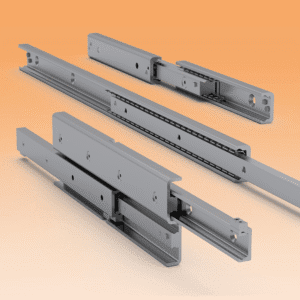
Linear tracks are mechanical guiding elements designed to support and direct motion in a straight line. They serve as the guiding surface or pathway for moving components such as linear bearings, rollers, wheels, or sliding blocks.
Linear tracks can be:
Precision-machined metal rails
Extruded aluminum tracks
Hardened steel guideways
Profiled rails with integrated raceways
Their primary purpose is to maintain alignment, reduce friction, and support loads during linear movement.
How Linear Tracks Work
Linear tracks function by providing a controlled linear path for moving components:
A track is mounted on a rigid base or machine frame.
A carriage, bearing block, or roller assembly engages with the track.
Motion occurs through rolling or sliding contact along the track surface.
Loads are transferred from the moving element to the track.
Smooth, accurate, and repeatable linear motion is achieved.
Depending on the system design, motion may be driven manually or by motors using ball screws, belts, racks, or linear motors.

Key Components of Linear Track Systems
1. Linear Track / Rail
Provides the guiding path
Typically hardened or surface-treated for durability
Ensures straightness and rigidity
2. Carriage or Bearing Block
Moves along the track
Supports loads and maintains alignment
May use rolling or sliding elements
3. Rolling Elements or Sliding Surfaces
Balls, rollers, or low-friction liners
Reduce friction and wear
4. Mounting Hardware
Bolts, clamps, or brackets
Secure the track to the machine frame
5. Seals and Covers (Optional)
Protect tracks from dust and debris
Extend service life in harsh environments
Types of Linear Tracks
1. Precision Linear Guide Tracks
Hardened steel rails with integrated raceways
Used with linear bearing blocks
High accuracy and load capacity
2. Roller Linear Tracks
Designed for wheel or roller carriages
Suitable for heavy loads and long travel distances
Common in material handling systems
3. Aluminum Linear Tracks
Lightweight and corrosion-resistant
Often used in automation and modular systems
Can integrate V-groove or T-slot designs
4. Sliding Linear Tracks
Use low-friction sliding materials
Simpler and cost-effective
Suitable for light-duty applications
5. Heavy-Duty Linear Tracks
Thick, reinforced steel construction
Designed for high loads, shock, and vibration
Used in industrial machinery and gantry systems
Materials and Surface Treatments
Hardened Steel – High load capacity and wear resistance
Stainless Steel – Corrosion resistance in humid or clean environments
Aluminum Alloy – Lightweight and modular design flexibility
Engineering Plastics – Low noise and chemical resistance
Surface Treatments – Induction hardening, chrome plating, anodizing, or black oxide
Material selection depends on load requirements, environmental conditions, and accuracy needs.
Advantages of Linear Tracks
High Precision and Repeatability – Maintains consistent motion paths
Low Friction – Smooth operation with rolling or sliding contact
High Load Capacity – Supports static and dynamic loads
Modular Design – Easy integration into machine systems
Durability – Long service life with proper maintenance
Versatility – Suitable for horizontal, vertical, or inclined motion
Applications of Linear Tracks
CNC Machines – Machine tool axes and gantry systems
Industrial Automation – Assembly lines and transfer systems
Robotics – Linear axes and positioning systems
Material Handling Equipment – Conveyors, carts, and lifts
Packaging Machinery – High-speed motion systems
Medical and Laboratory Equipment – Precision positioning
Furniture and Consumer Products – Drawer slides and adjustable systems
How to Choose the Right Linear Track
Load Capacity – Weight and dynamic forces
Accuracy and Straightness – Precision requirements
Travel Length – Stroke and rail length
Speed and Acceleration – Motion performance needs
Environmental Conditions – Dust, moisture, chemicals, temperature
Mounting and Space Constraints
Maintenance Requirements
Choosing the right linear track ensures reliable operation and long-term performance.
Installation Best Practices
Mount tracks on flat, rigid, and aligned surfaces
Use correct fastener torque and spacing
Verify straightness and parallelism
Lubricate rolling elements if required
Perform trial runs before full operation
Proper installation is critical for accuracy, load distribution, and durability.
Maintenance and Care
Clean tracks regularly to remove contaminants
Inspect for wear, corrosion, or damage
Lubricate rolling components as needed
Replace worn carriages or track sections promptly
Regular maintenance ensures smooth motion and extended service life.
Linear Tracks vs. Linear Guides
| Feature | Linear Tracks | Linear Guides |
|---|---|---|
| Function | Provide guiding path | Guide + bearing system |
| Precision | Moderate to high | High to very high |
| Load Capacity | Moderate to high | High |
| Complexity | Simple to moderate | Higher |
| Cost | Lower to moderate | Moderate to high |
Linear tracks are often used as part of a broader linear guide system.
Future Trends in Linear Track Technology
Integrated guide-and-track systems
Low-maintenance and sealed designs
Advanced coatings for wear and corrosion resistance
Lightweight composite tracks
Smart monitoring integration
These developments support high-efficiency and automated motion systems.
Frequently Asked Questions (FAQs)
1. What are linear tracks used for?
They guide and support straight-line motion in machinery, automation, and handling systems.
2. Are linear tracks the same as linear rails?
Linear rails are a type of linear track designed for high-precision bearing systems.
3. Can linear tracks handle heavy loads?
Yes, heavy-duty steel tracks are designed for high static and dynamic loads.
4. Do linear tracks require lubrication?
Rolling-based systems require lubrication, while some sliding systems may not.
5. What industries use linear tracks?
CNC machining, automation, robotics, material handling, packaging, and medical equipment.
Conclusion
Linear tracks are essential components in linear motion systems, providing the foundation for smooth, accurate, and reliable movement. From precision CNC machines to heavy-duty industrial equipment, linear tracks support load, alignment, and repeatability across countless applications.
With proper selection, installation, and maintenance, linear tracks deliver long service life, improved efficiency, and consistent motion performance.