

When it comes to precision machinery, automation, and robotics, linear rails are the unsung heroes that enable smooth, controlled, and accurate movement. Whether guiding a CNC spindle, supporting robotic arms, or enabling precise sliding in 3D printers, linear rails are indispensable in modern engineering.
At YH Linear, we specialize in designing and manufacturing a comprehensive range of linear motion systems, including various types of linear rails that ensure reliability and consistency in high-performance environments.
This article explores the main types of linear rails, their structures, applications, advantages, and how YH Linear’s precision engineering sets them apart in the world of linear motion technology.
Outline
| Section | Heading |
|---|---|
| 1 | Introduction to Linear Rails |
| 2 | What Are Linear Rails? |
| 3 | The Role of Linear Rails in Precision Engineering |
| 4 | Why the Type of Linear Rail Matters |
| 5 | Overview of Different Types of Linear Rails |
| 6 | Profiled Linear Rails (Square Type) |
| 7 | Round Shaft Linear Rails |
| 8 | Miniature Linear Rails |
| 9 | Heavy-Duty Linear Rails |
| 10 | Dual Shaft Linear Rails |
| 11 | Aluminum Linear Rails |
| 12 | Stainless Steel Linear Rails |
| 13 | Hardened Steel Linear Rails |
| 14 | Flange Type Linear Rails |
| 15 | Compact Linear Rails |
| 16 | Cross Roller Linear Rails |
| 17 | Integrated Linear Guide Rails |
| 18 | Modular Linear Rail Systems |
| 19 | Linear Rail Assemblies with Blocks |
| 20 | Linear Rail vs Linear Shaft: Key Differences |
| 21 | Linear Rail Load Capacities and Performance |
| 22 | Choosing the Right Linear Rail Type |
| 23 | How YH Linear Designs Each Type |
| 24 | Benefits of YH Linear Rail Systems |
| 25 | Applications of Different Types of Linear Rails |
| 26 | Installation and Alignment Tips |
| 27 | Maintenance and Lubrication Practices |
| 28 | Common Problems and Troubleshooting |
| 29 | Innovations in Linear Rail Design |
| 30 | FAQs on Types of Linear Rails |
| 31 | Conclusion |
Types of Linear Rails
Understanding the types of linear rails is essential for selecting the right motion system for your machinery. Each type differs in design, material, and application suitability.
At YH Linear, our engineers have refined these rail systems for precision, rigidity, and smoothness, ensuring optimal motion control across industries.
What Are Linear Rails?
Linear rails are precision-engineered mechanical components designed to provide guided, low-friction motion along a straight path. They consist of two main parts:
The rail – a hardened track mounted on a base.
The bearing block (or carriage) – which moves smoothly along the rail using recirculating balls or rollers.
YH Linear rails ensure stability, load-bearing capacity, and long-lasting motion accuracy in demanding environments.
The Role of Linear Rails in Precision Engineering
Linear rails form the backbone of precision machinery. Their purpose is to guide motion along one axis while maintaining accuracy, rigidity, and consistency.
Without them, CNC machines, robots, and 3D printers would struggle to achieve repeatable precision. YH Linear rails minimize vibration, reduce energy loss, and enable fast, stable linear movement for a range of automation solutions.
Why the Type of Linear Rail Matters
Selecting the right type of linear rail impacts:
Load capacity
Precision and repeatability
Speed and friction levels
Durability under harsh environments
YH Linear provides different rail types to meet these varying needs—each engineered for specific mechanical and environmental conditions.
Overview of Different Types of Linear Rails
There are multiple types of linear rails, categorized based on their structure, load capabilities, and motion method.
The most common types include:
Profiled (square) rails
Round shaft rails
Miniature rails
Heavy-duty rails
Dual-shaft rails
Aluminum and stainless steel rails
Let’s explore these in more depth.
Profiled Linear Rails (Square Type)
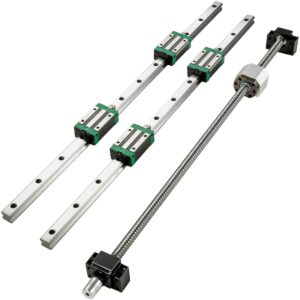
These are the most precise and rigid type of linear rails.
YH Linear’s square linear rails feature a rectangular cross-section and recirculating ball bearings for exceptional accuracy and high load capacity.
Key Benefits:
Excellent stiffness
Supports loads in all directions
Ideal for CNC machines and automation
They’re perfect for applications that demand micron-level accuracy and minimal deflection.
Round Shaft Linear Rails
Round shaft rails use cylindrical rods with sliding or ball-bearing bushings. They offer flexibility and smooth motion for applications with less demanding accuracy.
Advantages:
Easier installation
Tolerant to slight misalignments
Cost-effective
YH Linear round rails are ideal for pick-and-place systems, 3D printers, and laboratory automation.
Miniature Linear Rails
Compact, lightweight, and precise—miniature rails are the backbone of small-scale precision applications like semiconductor tools and optical devices.
YH Linear’s miniature rails, such as the MGN series, deliver exceptional performance in tight spaces while maintaining high accuracy.
Heavy-Duty Linear Rails
Engineered for extreme loads and industrial conditions, heavy-duty rails feature reinforced raceways and roller-based designs.
YH Linear’s heavy-duty rails can handle intense pressure, shock, and vibration—making them perfect for machining centers, press systems, and automation lines.
Dual Shaft Linear Rails
Dual shaft rails incorporate two parallel rods for better load balance and rigidity.
They are commonly used in gantry-style systems or applications requiring long travel with stable alignment.
YH Linear’s dual shaft rails ensure perfect parallelism and consistent motion accuracy.
Aluminum Linear Rails
Lightweight yet strong, aluminum rails offer high-speed operation with reduced inertia.
They are corrosion-resistant and suitable for cleanroom environments, robotic arms, and medical automation.
YH Linear’s aluminum rails combine low weight with durability and aesthetic appeal.
Stainless Steel Linear Rails
When corrosion resistance and hygiene are priorities, stainless steel rails are the best choice.
Common in food processing, pharmaceutical, and marine environments, these rails maintain precision even in moisture-prone settings.
YH Linear ensures stainless rails are polished, hardened, and sealed for superior longevity.
Hardened Steel Linear Rails
Made for endurance, hardened steel rails withstand repeated high loads and friction.
They’re perfect for CNC equipment and industrial robots.
YH Linear heat-treats every hardened rail to achieve optimal strength and wear resistance.
Flange Type Linear Rails
These rails feature a wider base for improved mounting stability.
Flange-type rails from YH Linear are preferred for heavy-duty and vertical load applications requiring enhanced structural integrity.
Compact Linear Rails
Compact rails are designed for space-limited systems like compact actuators or portable machines.
Despite their size, YH Linear compact rails provide outstanding smoothness and accuracy.
Cross Roller Linear Rails
Instead of ball bearings, cross roller rails use cylindrical rollers arranged alternately in crisscross fashion.
This provides ultra-smooth motion and higher rigidity.
YH Linear cross roller systems excel in measuring instruments, optical alignment, and precision stages.
Integrated Linear Guide Rails
Integrated rails combine the rail and block into a single assembly, simplifying installation and maintenance.
They’re ideal for modular automation systems where compactness and simplicity matter.
YH Linear’s integrated designs ensure maximum precision with minimal setup time.
Modular Linear Rail Systems
YH Linear modular rails allow for custom configurations—multiple rails, carriages, and preloaded assemblies to meet complex motion requirements.
This flexibility makes them ideal for automated production lines and multi-axis systems.
Linear Rail Assemblies with Blocks
The combination of a rail and its corresponding linear bearing block ensures reliable guided motion.
YH Linear provides matched rail and block pairs, guaranteeing perfect fit and high accuracy.
Linear Rail vs Linear Shaft: Key Differences
| Feature | Linear Rail | Linear Shaft |
|---|---|---|
| Structure | Rectangular, rigid profile | Round, cylindrical rod |
| Precision | Higher | Moderate |
| Load Capacity | Very high | Moderate |
| Installation | Requires alignment | Easier |
| Common Use | CNC, robotics | 3D printers, automation |
YH Linear manufactures both, depending on your specific performance and space needs.
Linear Rail Load Capacities and Performance
Load capacity depends on:
Contact angle
Preload setting
Rolling element size
Rail material and hardness
YH Linear tests every rail under simulated working conditions to ensure superior stiffness, minimal deformation, and reliable performance.

Choosing the Right Linear Rail Type
When selecting among types of linear rails, consider:
Required accuracy
Load and speed
Environment (dust, moisture, temperature)
Mounting constraints
Cost-efficiency
YH Linear engineers assist customers with custom recommendations to optimize each system’s performance.
How YH Linear Designs Each Type
Each YH Linear rail undergoes:
CNC machining and surface grinding
Hardness testing for consistency
Laser alignment inspection
Corrosion-resistant finishing
This meticulous process ensures every rail offers long-lasting reliability and smooth, silent operation.
Benefits of YH Linear Rail Systems
High precision and low friction
Long service life
Multiple size and load options
Rust and dust protection
OEM and custom designs available
Our rails are trusted by engineers across automation, medical, and industrial sectors worldwide.
Applications of Different Types of Linear Rails
CNC machines and milling centers
Industrial robots and cobots
Semiconductor and electronics manufacturing
Medical imaging equipment
Packaging and labeling systems
3D printers and laser engravers
Each YH Linear rail type is tailored to meet the precision and performance demands of these applications.
Installation and Alignment Tips
Clean mounting surfaces thoroughly.
Align rails parallel before tightening bolts.
Apply torque evenly in a diagonal sequence.
Check block movement for smoothness.
Following these steps ensures optimal rail life and accuracy.
Maintenance and Lubrication Practices
Proper maintenance extends rail life:
Lubricate with YH Linear-approved grease or oil.
Clean rails regularly.
Replace seals when worn.
Store unused rails in dry, temperature-controlled environments.
Common Problems and Troubleshooting
| Issue | Likely Cause | Solution |
|---|---|---|
| Uneven motion | Rail misalignment | Realign rails |
| Noise or vibration | Lack of lubrication | Apply grease |
| Excessive wear | Contamination | Clean and reseal |
| Reduced precision | Overloading | Reduce load or upgrade rail type |
YH Linear offers expert after-sales support for all motion systems.
Innovations in Linear Rail Design
YH Linear is pioneering next-generation rail systems featuring:
Self-lubricating blocks
Corrosion-proof coatings
Smart sensor monitoring
Hybrid ceramic rolling elements
Our mission is to continuously enhance the precision, reliability, and intelligence of motion technology.
FAQs on Types of Linear Rails
What are the main types of linear rails?
Profiled (square), round shaft, miniature, heavy-duty, and stainless steel are among the most common types.
Which type of linear rail is most precise?
Profiled (square) linear rails offer the highest rigidity and precision.
Can YH Linear customize rail designs?
Yes, YH Linear provides OEM customization, from materials to coatings and preload levels.
Do different rail types require different lubrication?
Yes. YH Linear recommends specific lubricants for each type to ensure optimal performance.
What’s the lifespan of YH Linear rails?
With proper maintenance, they can last millions of cycles or several years in continuous operation.
Where are YH Linear rails commonly used?
In CNC machining, automation, robotics, medical devices, and semiconductor equipment.
Conclusion
The types of linear rails you choose can determine your system’s accuracy, efficiency, and longevity. From compact miniature rails to robust heavy-duty designs, each serves a distinct role in precision motion systems.
At YH Linear, our expertise in linear motion engineering ensures that every rail—regardless of size or application—delivers consistent performance, exceptional durability, and unmatched precision.
When you need smooth, stable, and reliable motion control, YH Linear is your trusted partner for every type of linear rail.
Inbound Link Suggestions:
Link to: “Linear Guide Block”
Link to: “Precision Linear Guide”
Outbound Link Suggestions:
Link to: YH Linear Official Website